Guides
How to Read a Gin Label: What the Words Actually Mean
London Dry, navy strength, small batch, craft. A guide to which gin label terms are legally regulated and which are just marketing decoration.
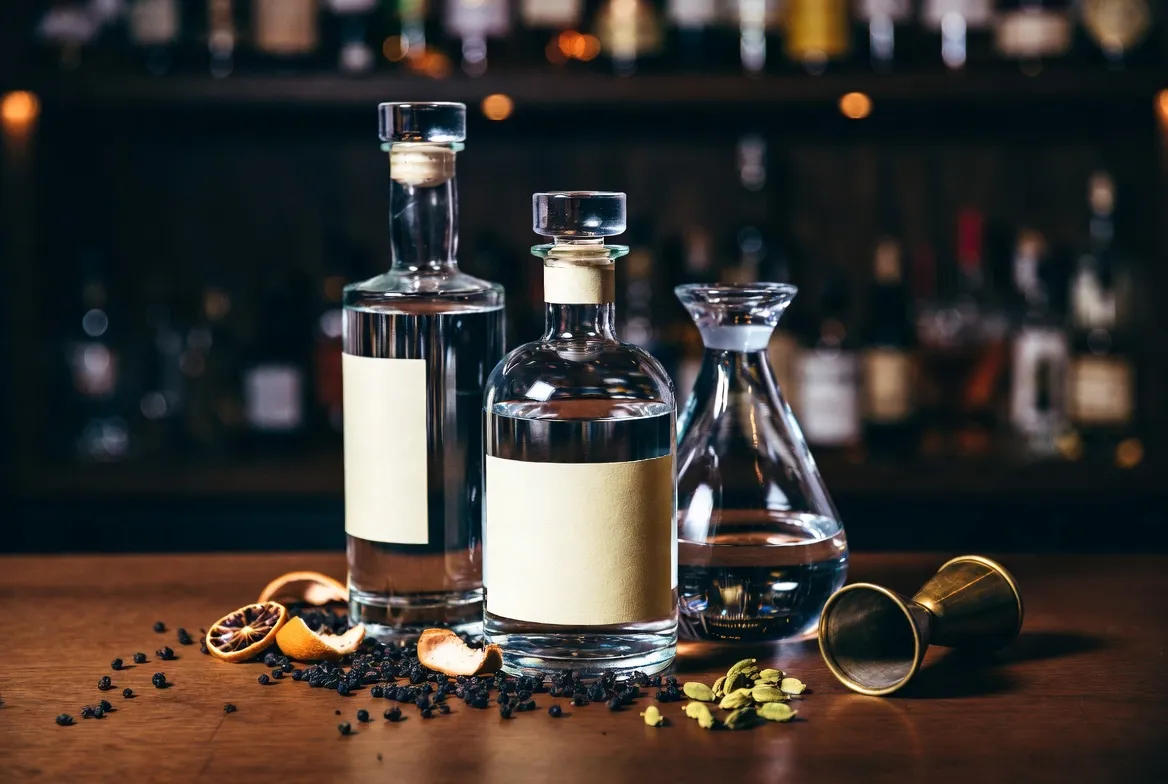
Walk into a well-stocked gin section and you’ll see bottles labeled “London Dry Gin,” “Distilled Gin,” “Premium Craft Gin,” “Small Batch,” “Hand-Crafted,” “Navy Strength,” and a hundred other variations. Some of these terms are legally defined and tell you something specific about how the gin was made. Others are marketing words with no regulatory meaning. Knowing which is which lets you make informed buying decisions instead of paying for vague claims. This is a guide to the actual meaning of the most common terms on gin labels.
The legally-defined gin categories
In the EU and UK (which have closely aligned spirits regulations), gin labels can use three regulated category names. Each name has a legal definition that producers must follow.
Compound Gin (also called “Gin”)
The minimum-standard category. Compound gin is made by:
- Starting with neutral grain spirit (95% ABV or higher)
- Adding natural flavorings, including juniper, plus optional botanicals
- Bottling at minimum 37.5% ABV in the EU/UK (40% in the US)
The flavorings can be added by maceration (steeping botanicals in spirit), by distillation (running the spirit through a still with botanicals), or by adding flavor essences directly. The juniper must be the predominant flavor.
This is the cheapest, simplest way to make gin. Bottom-shelf gins typically fall into this category. The flavor is generally less complex than distilled gin or London Dry.
A bottle labeled simply “Gin” (without “Distilled” or “London Dry”) is technically compound gin under EU/UK regulations - though in practice this is rare since producers prefer the higher-category labels.
Distilled Gin
A step up from compound gin. Distilled gin must be made by:
- Starting with neutral grain spirit
- Redistilling with juniper and other natural botanicals (not just adding essences)
- The juniper must be present during distillation, not added after
- Bottling at minimum 37.5% ABV in the EU/UK
The key distinction: distilled gin must be redistilled with the botanicals present, which produces a more refined and complex character than compound gin where flavors can simply be added to the base spirit.
Distilled gin can have additional flavorings, sweeteners, and coloring added after distillation. This is why a “Distilled Gin” might be sweetened or colored without losing its category status.
Most premium gins fall into either “Distilled Gin” or “London Dry Gin” categories.
London Dry Gin
The strictest category and historically the most prestigious. London Dry Gin must be made by:
- Starting with neutral grain spirit of 96% ABV or higher
- Redistilling with juniper and natural botanicals (the botanicals must be present during distillation)
- The juniper must be the predominant flavor
- After distillation, only water and a maximum of 0.1g/litre sugar can be added
- Bottling at minimum 37.5% ABV in the EU/UK (40% in the US)
- No coloring agents can be added
- No flavorings or essences can be added after distillation
This is the most rigorous standard. London Dry Gin is essentially “what you taste is what came out of the still” - no post-distillation manipulation.
Despite the name, London Dry Gin can be made anywhere in the world. The name refers to the style, not the geography. Plymouth, Edinburgh, Tokyo, Mumbai - any city’s gin can be labeled “London Dry Gin” if it meets the production rules.
The difference in practice
A “London Dry” label tells you the gin is unsweetened, uncolored, and was distilled with its botanicals (not flavored after). This is the most reliable indicator of traditional, classical gin character.
A “Distilled Gin” label tells you the gin was distilled with botanicals but may have been sweetened, colored, or had additional flavorings added afterward. This includes most modern flavored gins (pink, raspberry, etc.) and some contemporary craft gins.
A “Gin” label (with no other qualifier) suggests compound gin - the basic category. Modern producers usually avoid this designation in favor of the higher categories.
For everyday cocktail use, “London Dry Gin” and “Distilled Gin” are the categories worth buying. Compound gin works for cheap mixed drinks but tastes noticeably less complex.
Other regulated terms
A few additional category names worth knowing:
Geographical indications
Some gin styles have legal protection tied to a specific geographic origin:
-
Genever / Jenever - protected for Netherlands, Belgium, and some northern French/German regions. Made with malt wine base, distinctly different from contemporary gin.
-
Plymouth Gin - historically had Protected Geographical Indication (PGI) status until 2014. Currently maintains informal protection through historical legal precedents (only one producer remaining).
-
Mahón Gin - protected for production on the island of Menorca, Spain.
-
Vilnius Gin - protected for production in Vilnius, Lithuania.
These geographical names can only be used by producers in those specific regions. Outside producers can make similar-style gins but can’t legally use the protected name.
Navy Strength Gin
Navy strength gin is a category indicator rather than a strict legal classification, but it has consistent meaning across producers: a gin bottled at minimum 57% ABV.
The name traces to Royal Navy gunpowder testing - 57% ABV is the minimum alcohol content at which gunpowder would still ignite if soaked with the gin. Used historically to verify that the gin issued to officers wasn’t being watered down by suppliers.
A “Navy Strength” label tells you the gin is bottled high-proof. It doesn’t tell you the gin is necessarily juniper-forward or classical in style (some contemporary navy strength gins are floral or unusual), but the alcohol content is standardized.
Old Tom Gin
Old Tom is a historical style of gin - lightly sweetened (typically with sugar or licorice), produced in England in the 18th and 19th centuries. The style nearly died out in the 20th century but was revived during the cocktail revival of the 2000s.
Old Tom Gin labels indicate a sweeter style with about 1-10g/litre of added sugar. Used historically in classical cocktails like the Martinez and the Tom Collins. Not legally protected as a category, but contemporary producers using the name follow the historical style.
The unregulated marketing terms
This is where it gets less reliable. The following terms appear frequently on gin labels but have no legal definition - they mean whatever the producer wants them to mean.
”Craft Gin”
Means literally nothing legally. Producers use “craft” to suggest small-scale, traditional, hand-made production - but a gin distilled in a million-litre column still by a multinational corporation can legally use the word “craft” on its label. There’s no minimum or maximum production volume that defines “craft.”
Some producers use the term sincerely (genuinely small-scale operations). Others use it as marketing without backing. Without doing your own research on the producer, the word tells you nothing.
”Small Batch”
Similarly undefined. A “small batch” could be 50 bottles or 50,000 bottles. The term implies limited production but has no legal threshold. Used sincerely by some producers and as marketing by others.
If a label says “small batch,” look for additional information: actual production numbers, batch numbers on the bottle, distillery information. Real small-batch producers usually back up the claim with specifics.
”Premium” / “Super Premium” / “Ultra Premium”
Pricing tier descriptors with no legal meaning. Anyone can call their gin “premium.” The terms indicate where the producer is targeting in the market (i.e., expensive) but don’t indicate any specific production standard.
”Hand-Crafted” / “Hand-Made” / “Artisan”
These suggest manual production but have no legal definition. The producer using these terms might genuinely be running a small operation with manual processes, or might be using industrial production with marketing copy claiming otherwise.
”Traditional Method” / “Old World” / “Heritage”
Suggest classical production approaches but mean nothing specific. A gin made in 2024 in a brand-new distillery can call its production “traditional” without violating any regulation.
”Quadruple Distilled” or “Seven Times Distilled”
Distillation count is sometimes presented as a quality indicator. It’s not. More distillation doesn’t necessarily mean better gin - in fact, excessive distillation can strip out botanical character along with impurities. The number is mostly marketing.
What matters is the quality of distillation, the quality of botanicals, and the recipe - not the count of distillation passes.
”Cold Distilled”
A specific production method using vacuum distillation at lower temperatures (preserving delicate botanicals like cherry blossom or cucumber). Roku gin uses this for some of its botanicals. The term is technically meaningful but not regulated; some producers use it loosely.
ABV ranges and what they tell you
The alcohol percentage gives you information beyond just “how strong”:
-
37.5-40% ABV - the legal minimum range. Standard production for budget gins and mass-market brands. Bottled at minimum strength to maximize yield.
-
40-43% ABV - the standard premium range. Most quality London Dry gins (Tanqueray, Beefeater, Plymouth, Hendrick’s) bottle at 40-43%. This is the sweet spot for cocktail use.
-
43-47% ABV - upper premium range. Tanqueray No. Ten (47.3%), some craft gins, and “export strength” historical recipes. Generally indicates a gin designed to stand up in mixed drinks.
-
47-50% ABV - higher proof, often labeled “overproof” or “export strength.” Sipsmith VJOP (57.7%), some American craft gins.
-
57% ABV and above - navy strength territory. The defining proof level for the navy strength category.
In general, higher ABV gins are better for cocktails (the gin’s character doesn’t get lost in mixers) but can be less pleasant neat. Standard 40-43% gins are more versatile.
Botanical claims
Many gins list their botanicals on the label or bottle. The list is regulated to be accurate - if a producer claims their gin contains lavender, lavender must actually be in the recipe. However:
-
The quantity isn’t disclosed. A gin “containing rose petal” might use 50g per batch or 0.1g per batch.
-
The order matters somewhat. Producers sometimes list botanicals in order of dominance, sometimes alphabetically, sometimes randomly. There’s no required format.
-
Some botanicals are emphasized for marketing purposes even if they’re not particularly dominant in the flavor profile.
For comparing gins, the botanical list is useful as a starting point - if you don’t like cucumber, avoid gins prominently using cucumber. But the list doesn’t tell you which botanicals you’ll actually taste in the finished gin.
The country of origin
The country listed on a gin bottle tells you where the spirit was distilled or bottled. This may or may not be where the brand is headquartered:
- “Distilled and bottled in” + location - both production steps happened there
- “Bottled in” + location - the gin was distilled elsewhere and shipped in bulk for bottling
- “Product of” + country - generally indicates the country of bottling
For most consumers, the distinction matters less than the brand reputation, but it can be informative. Some gin brands are owned by multinational spirits groups and distilled in central facilities far from their marketed origin.
What to actually look at
If you’re standing in front of a gin shelf trying to make a buying decision, here’s the order to check:
- Category name - London Dry > Distilled Gin > Gin (compound)
- ABV - 40-43% for general use, higher for cocktail-forward gins
- Country of origin - if you have preferences
- Botanical list - to identify flavors you’ll like or want to avoid
- Price - calibrate against your expectations for the category
Things to ignore or minimize: “premium,” “craft,” “small batch,” “hand-crafted,” distillation count claims. These don’t tell you anything useful.
The honest takeaway
Gin labels contain genuine information mixed with marketing language. The regulated terms (London Dry, Distilled Gin, navy strength, geographical names, ABV) tell you something meaningful about the spirit. The unregulated terms (craft, small batch, premium, hand-crafted, artisan) mean whatever the producer wants and shouldn’t influence your buying decisions.
For most consumers, a single mental shortcut works: prioritize London Dry Gin or Distilled Gin in the 40-43% ABV range from producers you’ve heard of or whose botanical list interests you. That filters out most of the marketing noise and leaves you with categories of gin you can compare on the basis of what’s actually in the bottle.
Once you know the rules, label decoding takes about 10 seconds per bottle. The difference between an informed gin purchase and an uninformed one isn’t expertise - it’s just knowing which words on the label are doing real work and which are decoration. Now you do.
Tagged
Adjacent reading
Stirred or Shaken: When to Use Each Cocktail Technique
James Bond was wrong. Here's the actual rule for when to stir a cocktail and when to shake it, why it matters, and what each technique does to the drink.
How to Garnish a Gin Cocktail: Beyond the Lime Wheel
Garnish provides most of a cocktail's aroma, and aroma is most of flavor. How to match garnishes to your gin's botanicals - and the common mistakes.
How to Make a Proper Gin and Tonic at Home
The right glass, the right ice, the right ratio, the right tonic, the right garnish. Five elements that separate a great G&T from a bad one - explained simply.