Guides
Pink Gin and Sloe Gin: Two Different Drinks That Get Confused
Both pink. Both gin-adjacent. Completely different products. A guide to what each actually is, where they came from, and which deserves space on the shelf.
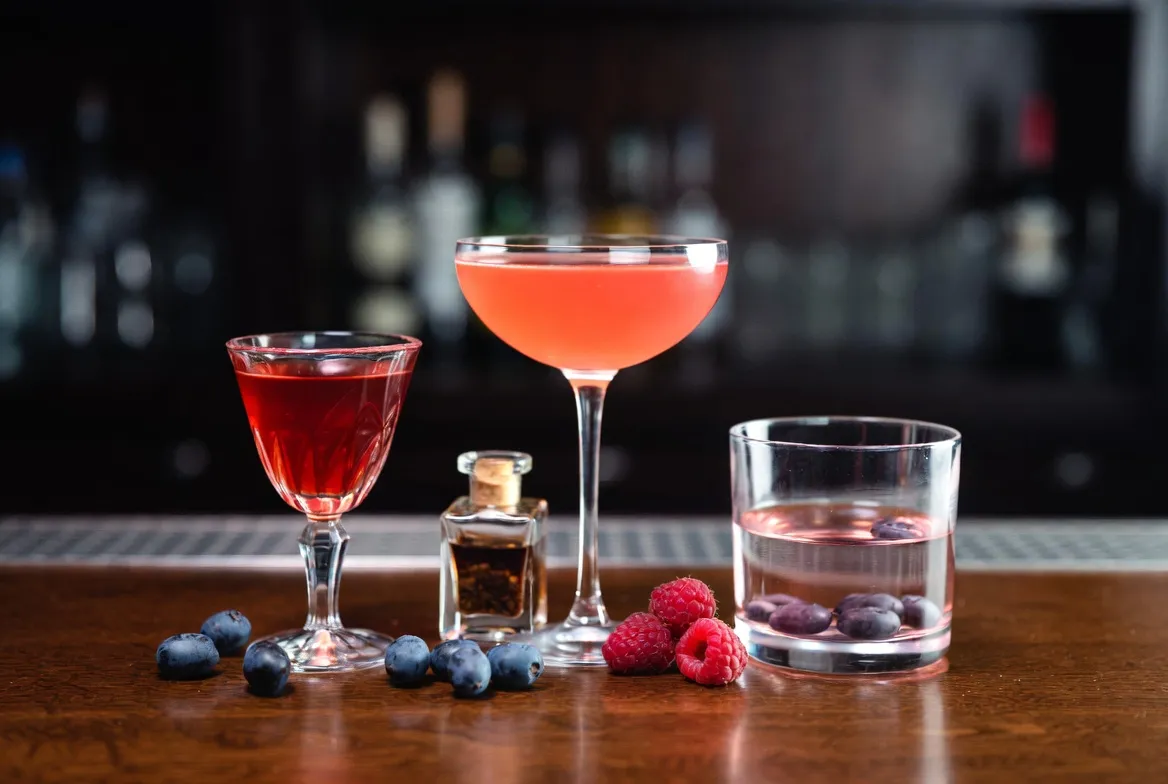
Walk through the gin section of most supermarkets in 2026 and you’ll see a confusing array of pink-colored bottles. Some are labeled “pink gin,” some “sloe gin,” some “raspberry gin” or “rhubarb gin” or various other-flavor gins. The visual similarity hides significant differences in what these products actually are. Pink gin and sloe gin are particularly often confused, and they’re genuinely different drinks with different histories, different production methods, and different uses. This is a guide to what each is, what they’re for, and what the recent pink-flavored-gin craze actually means.
Sloe gin - the older one
Sloe gin is a centuries-old British category. It’s made by macerating sloeberries (Prunus spinosa) in gin and sugar for several months, producing a sweet, fruity, lower-alcohol liqueur. The traditional production:
- Pick sloeberries in autumn (October-November in Britain) after the first frost
- Prick each berry with a needle to release juice
- Layer with sugar in a jar
- Cover with gin (usually a London Dry like Beefeater or Plymouth)
- Seal and store in a cool dark place for 2-3 months
- Strain off the berries; bottle the resulting liqueur
The result is a deep red-purple liquid, typically 25-29% ABV (significantly lower than the gin that went into it), with strong almond-and-stone-fruit character. The almond note comes from the prunus genus the sloeberry belongs to - the same family as cherries and almonds, with the characteristic benzaldehyde-derived almond aroma that develops in maceration.
Sloe gin tastes like:
- Sweet and fruity, not dry like gin. This is a sweet liqueur, not a gin variant.
- Stone fruit + almond. The dominant character.
- Slightly bitter undertones. From the sloeberry skin tannins.
- Recognizable gin botanical character underneath. Juniper, coriander, citrus from the base gin still come through but are heavily masked by the fruit.
Commercial sloe gins include Plymouth Sloe Gin, Sipsmith Sloe Gin, Hayman’s Sloe Gin, and Gordon’s Sloe Gin. The Plymouth and Sipsmith versions are highly regarded; Gordon’s is much sweeter and less complex. The price range is typically £18-30 in the UK, $25-40 in the US.
Sloe gin has been made in Britain for at least 300 years - the Sloe Gin Fizz appears in cocktail manuals from the 1880s, and home production of sloe gin has been a British autumn tradition since at least the 18th century. The Royal Navy issued sloe gin to officers as a winter warming drink. Sloe gin’s heyday was the late Victorian and Edwardian periods, when it was a fashionable women’s drink in upper-class British society.
Pink gin - the older meaning
Confusingly, “pink gin” has historically meant something completely different from the modern sweet flavored gin. The traditional pink gin is the Royal Navy cocktail:
- 50ml dry gin (typically Plymouth)
- 2-3 dashes Angostura bitters
- Stirred, served neat or with minimal ice
- No garnish
That’s it. The “pink” color comes entirely from the Angostura bitters, which contains gentian root and various other botanicals that turn the gin slightly pink-coral when added in small quantities. The drink isn’t sweet; it’s an aromatic dry cocktail that essentially tastes like gin with herbal-bitter complexity.
The historical context: Royal Navy officers needed to consume Angostura bitters as an anti-malarial. The drink developed as a more palatable way to do that than taking bitters straight. Plymouth was the gin issued to the Navy; Angostura was the standard quinine-adjacent herbal bitter; the combination became the standard officer’s drink in tropical postings.
Pink gin as a cocktail has fallen out of fashion since the mid-20th century. Most contemporary bars don’t make it unless specifically requested, and many bartenders under 35 have never made one. But it remains the historically correct meaning of “pink gin” - a Navy cocktail, not a sweet flavored spirit.
The modern pink gin craze
Beginning around 2014, gin producers (initially British) began launching pink-flavored gins as a new product category. The first widely-promoted example was Pinkster Gin (UK, 2014), made by infusing raspberries into gin. The success of Pinkster was followed by waves of similar products: Edinburgh Gin Rhubarb & Ginger, Beefeater Pink (strawberry), Whitley Neill Raspberry Gin, Tanqueray Sevilla Orange, and countless smaller-producer variations.
What modern pink/flavored gin actually is:
- Gin base. Usually a relatively neutral, lightly-juniper London Dry-style gin.
- Fruit infusion or fruit-flavored sweetening. Either real fruit maceration (the better products) or fruit-flavored syrup (the cheaper products).
- Sweetening. Most are sweeter than traditional gin - typically 5-15g/L residual sugar.
- Lower ABV. Often 37.5-40% rather than the 40-43% of traditional gin.
- Bright color. The pink, red, or coral color is sometimes from the fruit itself, sometimes assisted with food coloring.
These products occupy a middle ground between gin and liqueur. They’re sweeter, lower-proof, and more limited in cocktail applications than traditional gin, but less sweet than a proper liqueur like sloe gin.
The marketing positioning: accessible gin for drinkers who find traditional gin too dry or austere. The actual market position: a successful introductory product that has brought new (often younger, often female) drinkers into the gin category. Industry data from 2020-2024 showed pink/flavored gin segments growing at multiple times the rate of traditional gin.
The cocktail-bar position on modern pink gins is generally negative. Most serious bartenders consider them too sweet for proper cocktail use and too one-dimensional for sipping. The exception: pink gin and tonic, which works as a casual summer drink even if it doesn’t have classical cocktail credentials.
How to tell them apart
Quick reference:
| Feature | Sloe Gin | Modern Pink Gin | Classical Pink Gin |
|---|---|---|---|
| ABV | 25-29% | 37.5-40% | 40-47% |
| Sweetness | Sweet (liqueur) | Mildly sweet | Dry |
| Color | Deep red-purple | Pink/coral | Slightly pink-coral |
| Made by | Maceration of berries | Fruit infusion or flavoring | Cocktail mixing |
| Use | Neat, in fizzes, with gin tonic | G&T, mixed | Cocktail (neat) |
| Tradition | British, 18th century+ | British marketing, 2014+ | Royal Navy, 19th century |
If you see “sloe gin” on a label, expect a sweet, low-alcohol liqueur with almond-and-stone-fruit character.
If you see “pink gin” on a label, you’re probably looking at a modern flavored gin from the 2014+ category - sweetish, fruit-flavored, mid-proof.
If you see “pink gin” on a cocktail menu at a serious classical bar, you’re probably getting the Royal Navy cocktail - dry gin with Angostura bitters.
What to do with each
Sloe Gin uses:
- Neat as a winter sipping drink. Small glass, room temperature.
- Sloe Gin Fizz - 30ml sloe gin, 15ml lemon juice, 10ml simple syrup, topped with soda water in a tall glass with ice
- 50/50 with prosecco for a winter aperitif
- Splash in a Negroni for a fruity-sweet variation (controversial but worth trying once)
- In hot drinks: spoonful in mulled wine, or with hot apple juice and clove
Modern Pink Gin uses:
- Pink gin and tonic - the intended use. Light tonic, fresh berries as garnish.
- Casual summer drinking, prosecco mixers, party cocktails
- Not really useful for classical cocktail applications
Classical Pink Gin uses:
- The Royal Navy preparation: 50ml dry gin, 2-3 dashes Angostura, stirred and strained
- Historical-cocktail menus only; rarely served outside specialist bars
Should you have either on your shelf?
Sloe gin: Yes, particularly if you’re in a temperate climate. A bottle of Plymouth or Sipsmith Sloe Gin keeps for years (the high sugar content stabilizes it), gets used a few times a year for winter cocktails, and is genuinely useful for the Sloe Gin Fizz and similar drinks. The home-made version is rewarding if you have access to wild sloeberries; the commercial version is fine if you don’t.
Modern pink gin: Generally no, unless you specifically enjoy that style. The product is fine for what it is but rarely a useful tool for cocktail-making. If you want fruit character in a gin cocktail, you can usually get better results by adding fresh fruit to a traditional gin rather than buying a pre-flavored product.
Classical pink gin: Not a product you buy - it’s a cocktail you make. Keep Plymouth Gin and Angostura bitters on the shelf (you’ll have both anyway for other uses) and you can make it whenever you want.
The honest verdict
The conflation of these three drinks in contemporary marketing is unfortunate because the historical products (sloe gin, classical pink gin) are genuinely interesting and worth knowing about. The modern pink gin category has commercial success but has done some damage to the gin category’s identity - it’s pushed gin toward sweet-and-flavored territory that gin doesn’t historically occupy.
For someone serious about gin and cocktails:
- Make sloe gin in autumn if you can. Otherwise buy Plymouth Sloe Gin (the standard reference).
- Try a classical pink gin once. Use real Plymouth Gin and good Angostura bitters. Understand what the Navy was drinking.
- Skip modern pink/flavored gins unless you specifically enjoy that style. They’re not better than traditional gin; they’re just different and sweeter.
The category labels matter. When someone says “pink gin” in 2026, they probably mean the modern category. When a cocktail book from 1950 says “pink gin,” they mean the Navy drink. When anyone says “sloe gin,” they mean the autumn-fruit liqueur. Knowing which is which prevents disappointment and lets you make informed choices about what to actually drink.
Adjacent reading
The Best Sloe Gins: A Liqueur Worth Getting Right for Autumn
Sloe gin is a liqueur, not a gin - blackthorn berries steeped in gin and sugar. The best bottles, how they differ, and how to drink them from autumn on.
The Best Gins for Beginners: Where to Start With Gin
New to gin? The best gins to start with - approachable, versatile bottles that are easy to love, plus how to drink them and what to try as your taste grows.
The Best Gin Gifts: What to Buy the Gin Lover in Your Life
The best gin gifts for every budget - bottles, glassware, gift sets, tools and subscriptions. What to buy the gin lover in your life, and what to skip.