Reviews GBR
Sipsmith Gin: The London Distillery That Restarted a Tradition
The first new copper-pot gin distillery in central London in 189 years. How Sipsmith argued its way past Britain's distilling laws and what they make now.
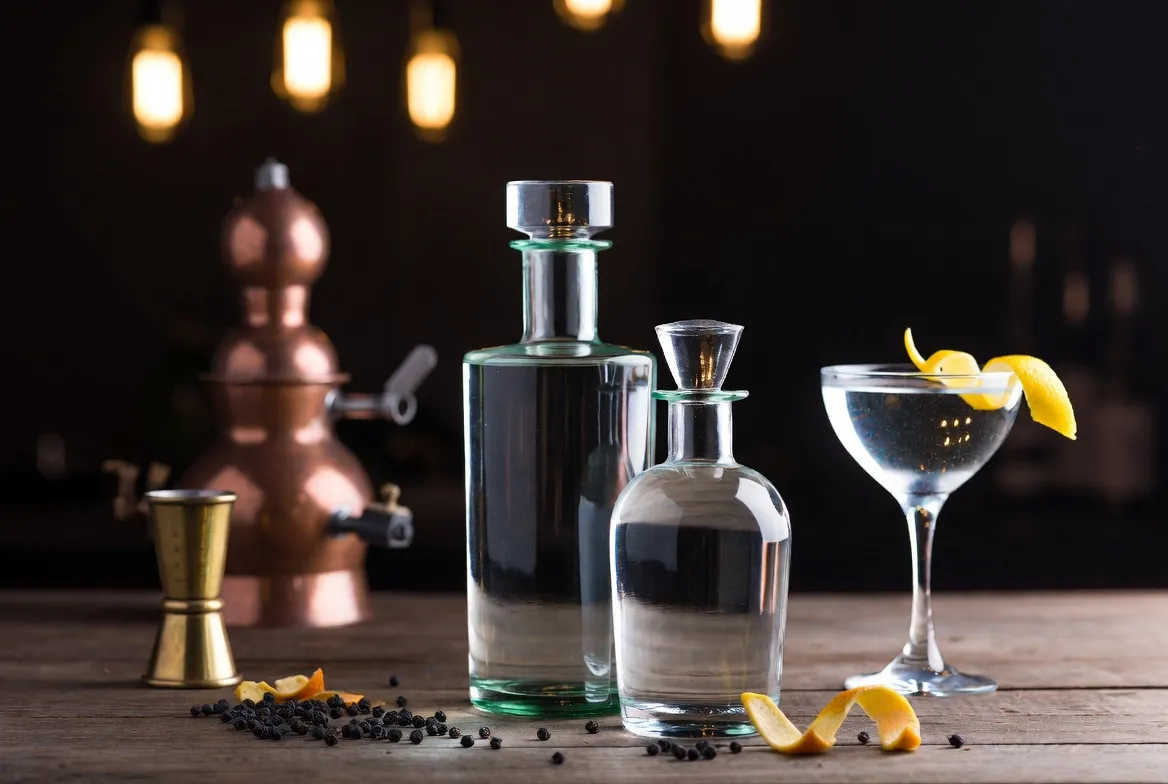
Sipsmith is the gin distillery that effectively forced Britain to update its distilling laws. When founders Sam Galsworthy, Fairfax Hall, and Jared Brown applied to start a small copper-pot gin distillery in Hammersmith, west London, in 2007, the regulatory framework prevented them - British excise law since the 1820s had effectively banned small stills (under 1,800 litres) on the assumption that they were for illegal moonshining. After a two-year legal and lobbying campaign, the law was changed in 2009, and Sipsmith began commercial production. They were the first new copper-pot gin distillery in central London since 1820. Everything that followed in the British craft gin movement - hundreds of new producers, the contemporary London Dry revival, the legitimization of small-batch production - traces back through this regulatory victory.
The producer
Sipsmith was founded by three friends with backgrounds in spirits marketing and journalism:
- Sam Galsworthy - background in drinks marketing at Pernod Ricard
- Fairfax Hall - background in spirits sales and brand development
- Jared Brown - drinks journalist and historian who had written extensively about gin
The three set out specifically to revive small-batch gin distillation in London. The barrier was Britain’s still-size restriction: the Customs and Excise Act of 1823 stipulated that no distillery could operate a still under 1,800 litres. The intention had been to make excise tax collection easier (large stills were easier to monitor than small ones), but the practical effect by the 2000s was to prevent any craft-scale gin production. Existing London gin producers (Gordon’s, Beefeater, Tanqueray’s central London production) operated at industrial scale; smaller production simply wasn’t permitted.
Sipsmith spent 2007-2009 lobbying HM Revenue and Customs to amend the regulations. The argument: small-batch production had clear consumer demand, the original 1820s justification no longer applied (modern monitoring methods made small-still excise collection straightforward), and Britain’s craft food and drink renaissance was being prevented by archaic legislation. The arguments succeeded. In late 2008, the regulations were amended to permit smaller stills. Sipsmith began production in 2009 from a former garage in Hammersmith, with a copper still named “Prudence” (250 litres).
The company was acquired by Beam Suntory (now Suntory Global Spirits, which also owns Roku) in 2016. Production has scaled significantly since then. The Hammersmith garage operation moved to a larger facility in Chiswick in 2014, and the brand is now distributed in over 40 countries.
The product range
Sipsmith produces multiple gin expressions:
London Dry Gin (41.6% ABV). The flagship - classical London Dry style with ten botanicals (juniper, coriander, angelica root, orris root, liquorice, almond, cassia, cinnamon, orange peel, lemon peel). Designed as a versatile cocktail gin in the traditional juniper-forward style.
VJOP - Very Junipery Over Proof (57.7% ABV). The most interesting Sipsmith expression. Higher proof with significantly more juniper - both more juniper berries in the recipe and a longer maceration time. The result is genuinely juniper-forward in a way most contemporary gins aren’t. VJOP works exceptionally well in spirit-forward cocktails (negroni, martinez) where the juniper character can stand against bitter modifiers.
Sloe Gin. Made by macerating sloeberries (small wild plums) in Sipsmith London Dry. Sweet, fruity, low-alcohol (typically 29% ABV). Used primarily in winter cocktails (Sloe Gin Fizz) or sipped neat.
Lemon Drizzle. A flavored gin with lemon zest and Sicilian lemons. Light, citrus-forward, designed for summer drinking.
Strawberry Smash. Seasonal expression with strawberry character. Limited production.
For purposes of this review, the focus is on the London Dry and VJOP, which are the two expressions that represent Sipsmith’s serious cocktail credentials.
What Sipsmith London Dry tastes like
The Sipsmith London Dry is a classical, juniper-forward, balanced London Dry - by design, it sits in roughly the same flavor space as Beefeater or Tanqueray. The differences from those producers are subtle:
- Slightly smoother mouthfeel than Beefeater. Sipsmith uses copper pot stills throughout (no column stills), which produces a fuller texture.
- More restrained citrus than Tanqueray. Sipsmith’s London Dry uses sweet orange peel rather than bitter orange, giving a softer citrus character.
- Clear juniper lead with supporting coriander and angelica. This is recognizably classical gin, not contemporary.
Difford’s Guide describes it as “a clean, balanced, classical London Dry with juniper-led character and a smooth, slightly sweet finish.”
The flavor profile: junipery on the nose with subtle floral notes, juniper-forward on the palate with citrus and pine character, slightly sweet finish from the liquorice. The drink wants stirred cocktails and gin & tonics rather than spirit-forward applications.
What VJOP tastes like
VJOP (Very Junipery Over Proof) is a different proposition. At 57.7% ABV with significantly more juniper, VJOP is a deliberately aggressive gin designed for cocktails where the gin needs to assert itself.
The character:
- Intense juniper - more juniper than almost any other commercial gin
- Higher proof gives more weight - 57.7% ABV means the gin doesn’t get lost in a cocktail
- Pine and resinous notes - the high juniper content produces a forest-like character
- Less citrus, less floral - the supporting botanicals are deliberately recessive
VJOP is one of the few gins that meets the navy strength specification (57% ABV) while also being explicitly juniper-forward. Most navy strength gins emphasize alcohol content; VJOP emphasizes juniper. This makes it particularly suitable for:
- Negronis - the high juniper and high proof can stand against Campari without disappearing
- Martinez - the classical 19th-century cocktail that wants spirit-forward gin
- Boulevardier-style stirred cocktails - any drink with strong bitter or vermouth components
It doesn’t work as well in:
- Gin and tonics - the intensity overwhelms tonic
- Light citrus cocktails - the juniper fights the citrus
- Aperitivo formats - too aggressive for casual drinking
VJOP is a specialist tool. If you make negronis regularly, it’s one of the best gins to keep on the shelf. For general use, the standard London Dry is more versatile.
How Sipsmith fits competitively
Sipsmith occupies the premium-classical position in the British gin market:
-
vs. Beefeater (~£20 in the UK) - Sipsmith London Dry is more refined and
50% more expensive (£30). Worth the upgrade for cocktail use, less obviously different for gin and tonic. -
vs. Tanqueray (~£25 in the UK) - Direct competitor. Sipsmith has slightly more rounded character; Tanqueray has slightly more citrus bite. Both are excellent, both are classical, both are reliable. Choose whichever your local retailer stocks at the better price.
-
vs. Plymouth (~£28 in the UK) - Different styles. Plymouth has more root character and a slightly sweeter profile; Sipsmith is drier and more juniper-led. Plymouth for classical pre-Prohibition cocktails (Martinez, Aviation); Sipsmith for general use.
-
vs. Tanqueray No. Ten (~£32-35) - Tanqueray No. Ten is fresher and more citrus-forward; Sipsmith is more traditional London Dry. No. Ten for martinis; Sipsmith for negronis and general utility.
-
vs. Hendrick’s (~£30) - Completely different styles. Hendrick’s is contemporary floral; Sipsmith is classical juniper. You’d want both if you can afford it, but if forced to choose, Sipsmith is the more versatile cocktail tool.
Pricing varies significantly by region. Sipsmith in Iceland or Nordic markets typically runs 30-40% more than the UK price due to alcohol taxes and import costs.
Where it deserves a place
For a small home bar (the three-bottle setup), Sipsmith London Dry is a legitimate choice as the classical workhorse. It’s slightly more expensive than necessary for a workhorse, but the quality is real.
For a more developed home bar, Sipsmith VJOP earns its specialist position. If you make spirit-forward stirred cocktails regularly, the higher proof and juniper content are genuinely useful tools.
For someone who values the modern British craft distilling movement and wants to support its founders, Sipsmith has historical importance beyond the quality of any individual bottle. They literally made craft gin distilling legal again in Britain. The product is good; the legacy is significant.
The honest verdict
Sipsmith London Dry is a high-quality, classical London Dry that competes effectively against the mass-market alternatives (Beefeater, Tanqueray, Gordon’s). It’s not radically innovative - by design, it’s a traditional product made carefully. The case for it is straightforward: better than the mass-market alternatives, made by people who care about gin, fairly priced for the quality.
VJOP is the more distinctive product. Few gins commit so explicitly to high juniper concentration combined with high proof. For drinkers who think modern gin has lost too much of its juniper character, VJOP is something close to a corrective. It’s not for everyone - the intensity is real - but for the right applications, nothing else does quite what it does.
The historical importance of Sipsmith is harder to overstate. Without the regulatory fight Sipsmith led in 2007-2009, the British craft gin scene of the 2010s and 2020s wouldn’t exist in its current form. Most of the small distilleries operating today owe Sipsmith a debt for the legal precedent they established. That’s not why you’d buy a bottle - the quality has to justify the purchase - but it’s a reasonable additional argument for keeping one in the cupboard.
Adjacent reading
Plymouth Gin: England's Oldest Gin and Its Own Soft Style
England's oldest working gin distillery, and a style all its own - softer and earthier than a London Dry. Production, palate, and its great classic Martini.
Gordon's: An Honest Look at the World's Best-Selling Gin
The world's best-selling gin, reviewed without snobbery. Production, palate, its lower 37.5% strength, and why it belongs in a G and T not a Martini.
Bombay Sapphire: The Vapour-Infused Gin That Built the Modern G and T
The blue bottle that made gin approachable for a generation. Vapour infusion, the ten-botanical recipe, and where it actually earns its place.