World USA
American Craft Gin: A Continental Style in Five Regions
Why the American gin renaissance happened so late, the five regional schools that emerged, and which producers actually built something distinct.
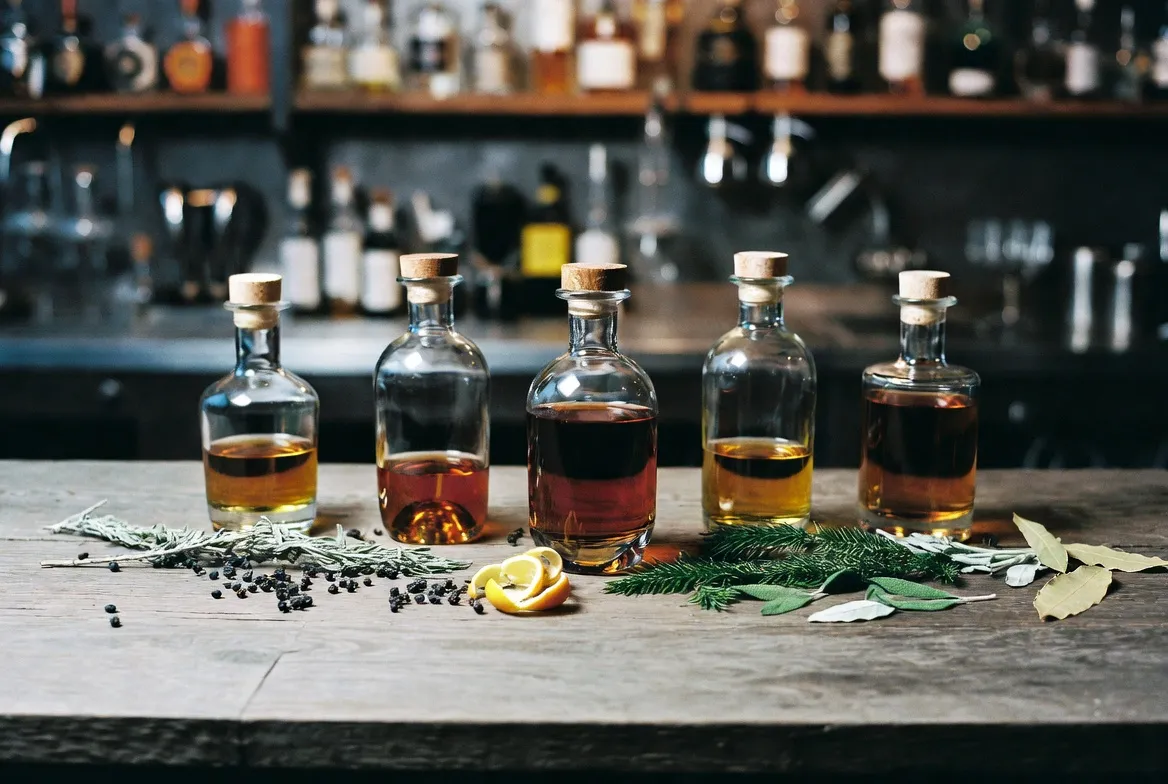
American craft gin is one of the late stories in the global gin renaissance. While London Dry was reinventing itself in England through the 1990s and 2000s, and Japan was quietly producing some of the most refined gins in the world by the late 2010s, American gin remained largely a category of mass-market bottles - Seagram’s, Gordon’s, Gilbey’s. The craft gin movement, when it finally arrived in the US, did so in fits and starts, and produced something that doesn’t quite resemble any other country’s gin tradition. This is a guide to how it happened, where the regional schools sit, and which producers are worth seeking out.
Why it took so long
American craft gin was essentially dormant for most of the post-Prohibition era. From the 1930s through the 1990s, the American gin shelf was dominated by a handful of mass-market brands - Seagram’s, Gordon’s, Gilbey’s - while serious craft distilling, where it existed at all, concentrated almost entirely on whiskey. The notable exception was Anchor Distilling’s Junipero, launched in 1996 - widely credited as the first modern American craft gin and a solitary precursor to the broader movement that emerged a decade later.
Three structural reasons explain the long gap:
-
Prohibition’s regulatory legacy. When alcohol production was legalized again in 1933, the regulatory framework that emerged - the Three-Tier System, the patchwork of state-level alcohol laws, the high licensing costs - was deliberately structured to favor large-scale producers. Small distilleries, which had been common before Prohibition, became economically unviable. The American spirits market consolidated around a handful of major producers and stayed that way for decades.
-
Whiskey dominance. America’s craft distilling tradition, when it began to revive in the early 2000s, focused largely on whiskey - particularly bourbon and rye. Craft distillers wanted to compete with Kentucky and Tennessee whiskey producers, where there was clear market demand and cultural prestige. Gin was often an afterthought, something small distilleries made on the side while their whiskey aged.
-
Tax law. Federal excise tax on spirits was (and is) structured in a way that makes small-batch production economically difficult. Until the Craft Beverage Modernization Act of 2017 created reduced rates for small producers, every craft distillery paid the same per-bottle tax as a multinational competitor. This wasn’t unique to gin, but gin’s lower margins compared to aged whiskey made it especially punishing.
The result: American craft gin emerged seriously only after roughly 2010, with Junipero as the lone significant precursor. Most of the producers that defined the category started between 2010 and 2015. Compared to the British craft gin boom (which began in the early 2000s) or the Japanese gin movement (which produced Ki No Bi by 2014), American gin is roughly a decade behind in maturation.
The five regional schools
What emerged in America isn’t a single style but five reasonably distinct regional approaches, each shaped by local geography, botanical availability, and cultural orientation.
Pacific Northwest school
Location: Oregon, Washington, parts of British Columbia (which, while Canadian, shares the regional style).
Defining producers: Aviation American Gin (Portland, founded mid-2000s, sold to Diageo 2020). Big Gin (Seattle). New Deal Distillery (Portland). Bull Run (Portland).
Style: Distinctly American in its willingness to push juniper to the background. The Pacific Northwest school led the move away from London Dry’s juniper dominance, instead emphasizing soft, floral, citrus-forward profiles. Aviation American Gin became internationally famous partly because Ryan Reynolds bought into the company in 2018 (the brand sold to Diageo in 2020), but the style was established long before. The gin uses cardamom, coriander, lavender, sarsaparilla, and orange peel in proportions that produce something almost more like a botanical liqueur than traditional gin.
Why it works: The Pacific Northwest has a rich foraging culture (mushrooms, berries, herbs) and a wine-region sensibility about local terroir. Distillers in the region treat botanicals the way Oregon winemakers treat grapes - as expressions of local growing conditions.
California school
Location: California, particularly the Bay Area.
Defining producers: St. George Spirits (Alameda - Botanivore, Terroir, Dry Rye gins). Junipero (San Francisco - the earliest American craft gin, founded 1996). Hangar 1.
Style: The most internally varied of any American gin school. St. George alone produces three distinct gins with three completely different characters. Botanivore is herbal and floral. Terroir is forest-and-mountain (Douglas fir, California bay laurel, coastal sage). Dry Rye uses rye distillate as the base, producing a richer, more grain-forward gin. The California school is defined less by a unified style and more by experimentation with regional botanicals - California bay laurel, coastal sage, citrus peels from local groves.
Why it works: California’s botanical diversity is greater than almost any comparable region in the world. From coastal redwoods to high desert to citrus country to wine country, distillers can source dramatically different botanicals within a few hours’ drive. The California school is partly about showcasing that range.
East Coast / New York school
Location: New York, Brooklyn especially. Some producers in Massachusetts, Pennsylvania.
Defining producers: Greenhook Ginsmiths (Brooklyn). Industry City Distillery. Brooklyn Gin. Barr Hill (Vermont, technically New England but stylistically aligned).
Style: Most classically-minded of the American schools. Greenhook’s American Dry Gin is essentially a London Dry made in Brooklyn - juniper-forward, dry, traditional. Brooklyn Gin emphasizes fresh citrus. The East Coast school respects the traditional gin template more than the West Coast schools do, partly because of stronger orientation toward European cocktail culture in New York’s bar scene.
Why it works: New York’s cocktail revival (Death & Co, PDT, Employees Only, Milk & Honey lineage) demanded gin that worked in classical cocktails. Producers responded by making gins that could stand up to a proper Martini or Negroni, rather than gins that needed special tonic pairings to show their character.
Mountain West school
Location: Colorado, Wyoming, Idaho, Montana.
Defining producers: Spring 44 (Colorado). Leopold Bros (Colorado). Wood’s High Mountain (Colorado). 10th Mountain (Colorado).
Style: Defined by ingredients you can only get at altitude or in arid conditions - juniper from high country (with different chemistry than European juniper), sagebrush, pine, mountain herbs. The water source matters more than in most regions: several Mountain West producers market high-altitude spring water as part of the product. The gins tend to be drier than Pacific Northwest gin, but still less juniper-forward than New York gin. A middle-ground school with distinctive arid-mountain character.
Why it works: The American Mountain West has botanicals that are difficult to source elsewhere - high-elevation juniper has different chemistry than European juniper, and the dry climate concentrates essential oils. Producers can build gins around ingredients with genuinely unusual regional character.
Midwest farm school
Location: Wisconsin, Minnesota, Iowa, Illinois.
Defining producers: Death’s Door (Wisconsin - the most prominent). Cardinal Spirits (Indiana). Letherbee (Illinois). 45th Parallel (Wisconsin).
Style: Simplicity. Death’s Door uses just three botanicals (juniper, coriander, fennel), in deliberate contrast to the multi-dozen-botanical approach of Monkey 47 or even St. George Botanivore. The Midwest farm school positions itself as the anti-complexity counter-movement - locally sourced grain, minimal botanicals, traditional production. The result is gins that are clean, direct, and well-suited to classical cocktails. Less flashy than Pacific Northwest gin, less experimental than California gin, but with a clear philosophical position.
Why it works: The Midwest farm distillery tradition draws on grain-distillation history (corn, rye, wheat - the same crops that make American whiskey). Distillers tend to come from agricultural backgrounds and treat gin as an extension of farm produce. The minimalist approach reflects this - showcase what you grow, don’t bury it under botanical complexity.
What’s common across the schools
Despite regional differences, American craft gin shares some characteristics:
Less juniper than European tradition. Many American producers push citrus or floral notes forward and juniper backward compared to classical London Dry. This is a genuine stylistic preference, not a production accident - American palates often lean toward brighter flavors. (Note that there are exceptions - particularly in the East Coast school - so this isn’t universal.)
Willingness to use unusual base spirits. St. George Dry Rye uses rye whiskey distillate. Several producers use corn-based neutral spirit rather than the wheat-based spirit traditional in European gin. American producers are generally more willing to vary the base for character.
Strong regional sourcing. American producers consistently market local botanicals more aggressively than European producers do. The “terroir” framing - common in American wine - has carried over to American craft gin in a way that’s less prominent in English or Dutch gin marketing.
Higher prices than mass-market gin. A typical American craft gin retails for $35-55 in the US market, often higher than equivalent imported gins after accounting for shipping. Some of this is the smaller production scale; some is the willingness of the American craft consumer market to pay premium prices for “story” gins.
Bottles worth seeking out
If you’re new to American craft gin, these five represent the regional schools well:
- St. George Botanivore (California) - the broad-spectrum botanical California school
- Aviation American Gin (Pacific Northwest) - the floral, citrus-forward Portland style
- Greenhook American Dry (New York) - the classical East Coast approach
- Leopold Bros American Small Batch Gin (Colorado) - the Mountain West style
- Death’s Door Gin (Wisconsin) - the Midwest minimalist approach
Each is genuinely different from the others. Tasting through these five would give a useful map of where American gin actually sits as a category.
The honest verdict
American craft gin is at an interesting moment. The earliest producers (Junipero, St. George, Aviation, Death’s Door) have been established for over a decade and have proven their styles. A second wave of producers is now building on those foundations - more regional specificity, more confidence about what American gin can be that European gin isn’t.
The category’s weakness, compared to British or Japanese gin, is consistency. Quality varies enormously - some American craft gins are excellent, others are essentially marketing exercises around mediocre liquid. The cultural permission to be “craft” combined with the high consumer willingness to pay premium prices has allowed some weak products into the category.
The category’s strength is genuine regional distinctiveness. A St. George Terroir tastes specifically like coastal California; a Spring 44 tastes specifically like the Colorado mountains. This is something European gin tradition - which is more typological than regional - doesn’t always produce. The closest international parallel is Japanese gin, which similarly emphasizes ingredients tied to local geography.
If you’ve been drinking European gin and want to taste something different, the American craft category is now mature enough to be worth exploring. Skip the celebrity-endorsed mass-market gins and the marketing-led bottles. Look for the regional schools instead. The good American gins are very good, and they’re not just trying to be British gins made in America - they’re attempting something distinct, and increasingly succeeding.
Adjacent reading
Indian Gin and the New Asian Craft Wave
India produces the cardamom, coriander, and citrus for gin worldwide. Why it took until the 2020s to make its own, and which producers matter.
Australian Gin: A Continental Distillation Boom Built on Native Botanicals
Lemon myrtle, finger lime, pepperberry, anise myrtle. How Australia built a distinctive gin tradition from ingredients that grow nowhere else.
Irish Gin: Botanicals From the Atlantic Edge
Ireland's gin scene has exploded, built on native botanicals and Atlantic character. The distilleries, the style, and the Irish bottles worth seeking out.