World ESP
Spain's Gin Tonic Tradition: Why Spanish G&Ts Are Built Differently
The copa de balón, the elaborate garnishes, the heavier pour. How the Spanish approach to gin and tonic became globally influential.
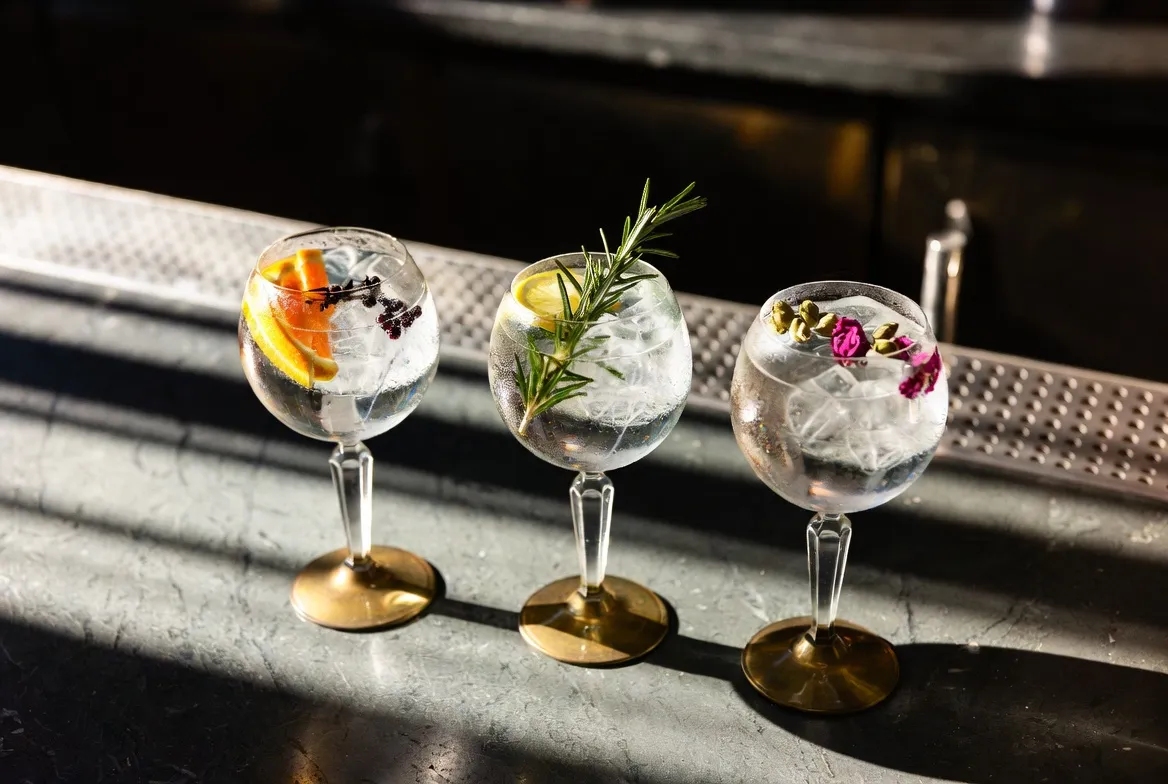
The gin and tonic is a British drink with a colonial origin story, but somewhere around 2008 it stopped being a British drink and became a Spanish one. Spain reinvented the format - the glass, the pour, the garnish, the ritual - and the rest of the world followed. Today most serious bars outside the UK make their G&Ts in the Spanish style. The traditional British highball, with a wedge of lime and roughly equal parts gin to tonic, has been displaced almost entirely. This is the story of how that happened, and what specifically defines a Spanish G&T.
The format Spain invented
Four elements separate a Spanish gin tonic (note the absence of “and” - Spaniards drop it) from a traditional British G&T:
-
The glass. A copa de balón - a large, stemmed, bulbous glass resembling a red wine glass. Replaces the highball.
-
The pour. Significantly more gin (50-60ml typically), less tonic (150-200ml). Gin-to-tonic ratio closer to 1:3 than the British 1:4 or 1:5.
-
The garnish. Multiple botanicals - usually 2-4 elements chosen to complement the specific gin. Replaces the single lemon or lime wedge.
-
The temperature. Glassware pre-chilled or filled with very cold large-format ice. The drink should be punishingly cold from the first sip.
Each of these choices was a deliberate response to a perceived weakness in the traditional British format. Spanish bartenders weren’t being eccentric for its own sake - they were optimising for flavor delivery.
The copa de balón
The bulbous wine-glass shape isn’t decorative. The wide bowl concentrates the gin’s aromatic compounds at the rim, where they meet the drinker’s nose with each sip. A highball glass, by contrast, releases aromatics into the room rather than into the glass. With a complex contemporary gin, this difference is significant - you can smell the gin properly in a copa, and the experience of drinking the cocktail becomes meaningfully different.
The stem matters too. It keeps the drinker’s hand off the bowl, which preserves temperature. A gin tonic warms quickly when held; the copa lets you grip the stem and not transmit heat through the glass.
Spanish bars typically use copas in the 600-700ml range - quite large by international standards. This isn’t because Spaniards drink more; it’s because the large bowl allows for substantial ice (large-format cubes that melt slowly) and gives the aromatic compounds more space to develop.
The pour - and why it’s different
A traditional British G&T uses about 25ml of gin in 150ml of tonic. This produces a long, refreshing drink that’s roughly 4-5% ABV. The gin is a flavoring rather than the dominant character.
A Spanish gin tonic uses 50-60ml of gin in 150-200ml of tonic. The drink becomes roughly 8-10% ABV - significantly stronger - and the gin is the lead character rather than a supporting note. Spanish bartenders defend this by arguing that if you’re not drinking the gin, why not just drink tonic.
The practical consequence: Spanish G&Ts are slower-sipping drinks. A British G&T can be drunk in 10-15 minutes. A Spanish one stretches to 30-45 minutes if you’re treating it as a cocktail rather than a refreshment. The pace is deliberate.
This higher gin proportion also makes the choice of gin more consequential. With 25ml of gin in a long tonic, a £20 gin and a £45 gin produce similar drinks. With 60ml of gin and a careful tonic pairing, the difference is obvious. Spanish bar culture rewards spending money on the gin in a way British G&T culture historically didn’t.
The garnish philosophy
The most visible Spanish innovation. A traditional British G&T uses lemon or lime - one citrus, sometimes a sprig of mint, never more than two elements total. A Spanish gin tonic uses garnishes selected to pair with the specific gin’s botanical profile, often three or four elements:
- With a juniper-forward London Dry: lime peel, a juniper berry, a single black peppercorn
- With a citrus-forward gin: grapefruit peel, lemon peel, a sprig of thyme
- With a floral contemporary gin: dried rose petal, cardamom pod, a thin slice of cucumber
- With a Mediterranean-style gin (Gin Mare, etc.): rosemary sprig, green olive, lemon peel
The principle: the garnish amplifies the gin’s existing character rather than fighting it. A floral gin gets floral garnishes. A herbal gin gets herbal garnishes. A juniper-forward gin gets juniper-friendly accompaniments.
This is also where Spanish G&T culture became a visual phenomenon. The elaborate garnishes photograph well, and the practice spread internationally partly through Instagram and food blogs around 2010-2014. By 2015 the multi-garnish G&T was standard in serious bars from London to Tokyo to Sydney.
The cities - where to drink Spanish G&Ts
Spanish gin tonic culture is concentrated in specific cities, each with its own tradition:
San Sebastián / Donostia, in the Basque Country, is the unofficial capital of serious gin tonic culture. The pintxo bar tradition created a context where small carefully-prepared drinks were the norm, and gin tonics fit naturally. Bars like La Cuchara de San Telmo, Bar Bergara, and Bar Nestor are pintxo destinations; the gin tonic culture grew alongside.
Barcelona developed gin tonic culture in parallel with its cocktail-bar renaissance in the 2000s. Bars like Dry Martini Barcelona (founded 1978, gin tonic-focused since around 2005) and Boadas Cocktails (the city’s oldest cocktail bar, founded 1933) represent the upmarket end. The neighborhood of Born has several bars specializing in extensive gin selections.
Madrid runs the largest concentration of dedicated gin tonic bars, including Salmon Guru, 1862 Dry Bar, and Macera. Madrid’s gin culture tends toward maximalism - bigger gin selections, more elaborate garnish theatre - than the Basque approach.
Bilbao has a quieter but serious gin tonic scene tied to its Basque restaurant culture - particularly at Etxanobe, which influenced how serious gastronomic restaurants integrated gin tonic into the meal experience.
Spanish gin - the producer side
Spain doesn’t just consume gin tonics; it also produces a notable share of the world’s premium gin. The country’s most internationally successful gin brands include:
-
Gin Mare (Vilanova i la Geltrú, Catalonia) - the Mediterranean herbal gin that defined Spanish craft gin globally. Rosemary, thyme, basil, and arbequina olive among its signature botanicals.
-
Nordés (Galicia) - made with Albariño wine grapes alongside the gin botanicals, producing a softer, slightly grape-influenced character.
-
Xoriguer (Mahón, Menorca) - the only gin with a Spanish geographical indication. A traditional juniper-forward style produced continuously since the 18th century.
Spain consistently ranks in the top three countries for gin consumption per capita globally, alongside the Philippines and Slovakia. The gin tonic is, in volume terms, a significant Spanish drink.
How to make a Spanish-style gin tonic at home
The minimum requirements:
-
A copa de balón or a large red wine glass. Stemmed, bulbous, at least 500ml capacity. Available online for £8-15 each.
-
A good gin. Spanish gin tonic culture rewards better gin. A premium London Dry (Tanqueray No. Ten, Sipsmith VJOP, Plymouth) or a contemporary gin (Hendrick’s, The Botanist, Gin Mare) - anything in the £30-45 range works well.
-
A premium tonic. Fever-Tree Indian Tonic, 1724 Tonic, or Schweppes Heritage. Not regular Schweppes; not Tesco own-brand. The tonic matters more than most British drinkers realize.
-
Large-format ice. Big cubes or a single large sphere. Crushed ice or small cubes dilute too fast and warm the drink.
-
Garnishes chosen to pair with the gin - not just lime. Citrus peels (not wedges, just peels), herb sprigs, dried botanicals, peppercorns, juniper berries.
The build:
- Fill the copa with large ice cubes - really fill it. Three or four big cubes minimum.
- Stir the ice briefly with a spoon. The glass should become cold to touch.
- Pour the tonic onto the back of a spoon held against the glass, to minimize bubble loss. Pour a full 150-200ml.
- Pour the gin (50-60ml) directly into the glass.
- Add garnishes by hand. Express any citrus peels (twist the peel over the glass to release oils) before dropping them in.
- Stir very briefly with the bar spoon - just once or twice. Over-stirring kills the carbonation.
The drink should be cold enough that condensation forms on the outside of the glass within seconds.
The honest verdict
The Spanish gin tonic is a more interesting drink than the British G&T - more aromatic, more spirit-forward, more deliberate. But it’s also a longer commitment. A British G&T is a refreshment; a Spanish gin tonic is a cocktail with ceremony. For weeknight drinking, the British format is fine. For a deliberate aperitivo or a serious bar experience, the Spanish approach is better.
The cultural shift from British to Spanish format has been one of the genuinely positive developments in international gin culture over the past twenty years. The drink is taken more seriously now, in more countries, than it ever was during gin’s first international wave. Spain didn’t invent gin and tonic, but it changed how the world thinks about it.
If you want to taste the Spanish format properly, the easiest path is a serious cocktail bar that specializes in gin - any major city has at least one. The home version is good but the bar version, with proper glassware and professional garnish work, is the canonical experience. San Sebastián in particular rewards the effort of going there for it.
Adjacent reading
Irish Gin: Botanicals From the Atlantic Edge
Ireland's gin scene has exploded, built on native botanicals and Atlantic character. The distilleries, the style, and the Irish bottles worth seeking out.
Scottish Gin: How Scotland Quietly Became a Gin Powerhouse
Scotland makes far more gin than whisky by volume, and some of the best in the world. The distilleries, the foraged botanicals, and the bottles to know.
Indian Gin and the New Asian Craft Wave
India produces the cardamom, coriander, and citrus for gin worldwide. Why it took until the 2020s to make its own, and which producers matter.