Cocktails USA
The Aviation: A Cocktail That Disappeared and Came Back Differently
Gin, maraschino, lemon, and violet. The pre-Prohibition cocktail that vanished and returned with a missing ingredient. Now made two ways.
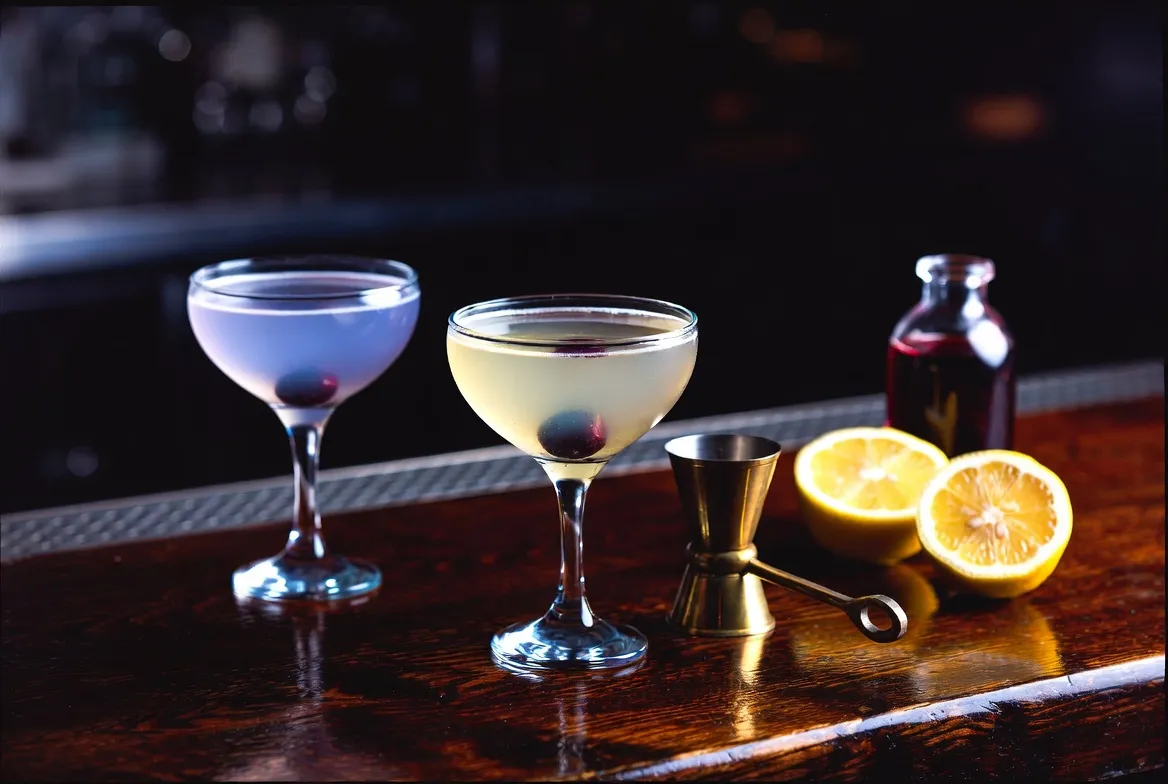
The Aviation is a pre-Prohibition American cocktail that essentially died for fifty years and came back differently than it left. The original recipe, published in 1916 by New York bartender Hugo Ensslin, called for gin, lemon juice, maraschino liqueur, and crème de violette (a violet-flavored liqueur). When the cocktail revival rediscovered the Aviation in the 1990s, the crème de violette ingredient was effectively unavailable in the US market. Bartenders made the drink without it - and the modified recipe (gin, lemon, maraschino) became the contemporary standard. The question of whether to include the violet liqueur, and what kind, is now one of the genuine arguments in serious cocktail bartending. This is a guide to both versions, the differences, and which is actually better.
The original - Hugo Ensslin’s 1916 recipe
The Aviation was first published in Recipes for Mixed Drinks, a cocktail manual written by New York bartender Hugo Ensslin in 1916. Ensslin was the head bartender at the Wallick Hotel in Manhattan, and his book is one of the most important pre-Prohibition cocktail references. The recipe:
- 1/3 lemon juice
- 2/3 El Bart gin (a now-extinct American gin brand)
- 2 dashes maraschino liqueur
- 2 dashes crème de violette
- Shaken, strained into a coupe
Modernized into measurements:
- 60ml gin
- 15ml fresh lemon juice
- 7-8ml maraschino liqueur (Luxardo is standard)
- 2-3 dashes crème de violette
- Shaken with ice, strained into a chilled coupe
- Garnish: a maraschino cherry (Luxardo, not the bright red American kind)
The drink’s character: pale violet-blue color from the crème de violette, citrus-led, with the maraschino contributing a distinctive cherry-almond note and the violet adding floral complexity. The name “Aviation” refers to the pale sky-blue color of the cocktail, which evoked early 20th-century aviation imagery.
In Ensslin’s era, the Aviation was a popular pre-dinner drink in New York hotel bars. It survived the early years of Prohibition (1920-1933) in name only, since the necessary ingredients became difficult to source. Crème de violette in particular essentially disappeared from American supply chains during and after Prohibition.
The 1930 Savoy revision - the cocktail loses its violet
The Savoy Cocktail Book, compiled by Harry Craddock at the Savoy Hotel in London and published in 1930, included an Aviation recipe - but without crème de violette. Craddock’s version:
- 2/3 gin
- 1/3 lemon juice
- 2 dashes maraschino
No violet liqueur. This was either deliberate simplification or a reflection of crème de violette being unavailable in 1930 London. Whatever the reason, the Savoy Cocktail Book was one of the most influential cocktail references of the mid-20th century, and Craddock’s version became the standard for decades.
Through the dark ages of cocktail bartending (roughly 1940 to 1990), the Aviation was rarely made anywhere. When it appeared at all, it was almost always Craddock’s three-ingredient version. Crème de violette had essentially disappeared from the international spirits market by the mid-20th century, surviving only as an obscure French regional liqueur.
The cocktail revival - rediscovery and reconstruction
When the cocktail revival began in the 1990s, bartenders rediscovering the Aviation faced a practical problem: crème de violette was essentially unavailable. The recipe books they were working from (Savoy, Old Mr. Boston, and similar mid-century references) showed Craddock’s three-ingredient version. The historical research showing Ensslin’s four-ingredient original wasn’t widely known until later.
The result: the Aviation was reintroduced to cocktail menus throughout the 1990s and 2000s as a three-ingredient drink. It became one of the cocktail revival’s signature gin drinks - elegant, citrus-forward, with the maraschino providing a distinctive cherry-almond character.
Then, in 2007, the Austrian liqueur producer Rothman & Winter began importing a high-quality crème de violette to the US market specifically to serve the growing cocktail revival demand. By 2009-2010, crème de violette was available again in serious cocktail bars. The historical research had also caught up - bartenders now knew Ensslin’s original recipe included violet, and the question became: do we go back to the four-ingredient version, or stay with Craddock’s three-ingredient interpretation?
The argument has been going on ever since.
The two contemporary versions
The Ensslin / “historical” Aviation:
- 60ml gin (Plymouth or Tanqueray)
- 15ml fresh lemon juice
- 7-8ml Luxardo maraschino
- 5-7ml Rothman & Winter crème de violette
- Shaken, strained into a chilled coupe
- Luxardo cherry garnish
The drink is pale violet-blue (the color the name references), with both maraschino’s cherry-almond character and the floral violet note. The recipe is more complex than the three-ingredient version and produces a more distinctive drink. This is what serious cocktail bars dedicated to historical accuracy serve.
The Craddock / “modern” Aviation:
- 60ml gin
- 15ml fresh lemon juice
- 8-10ml maraschino liqueur
- Shaken, strained into a chilled coupe
- Lemon twist or cherry garnish
The drink is pale yellow (no violet), citrus-led with maraschino as the dominant secondary character. The recipe is simpler and produces a cleaner, more focused drink. This is what most general cocktail bars serve when “Aviation” is on the menu.
What’s the actual difference
Trying both versions side-by-side reveals genuine differences:
Visual: The Ensslin version is pale violet-blue (sometimes more lavender than blue). The Craddock version is pale yellow-to-clear. The color difference is meaningful - “Aviation” as a name only makes sense for the Ensslin version.
Aroma: The Ensslin has a distinct floral note from the violet that the Craddock lacks. The maraschino aroma is more dominant in the Craddock version.
Palate: The Ensslin is more complex but slightly busier - maraschino cherry-almond, violet, citrus, gin botanicals all competing for attention. The Craddock is simpler and more focused, with maraschino clearly supporting the gin.
Balance: The Ensslin is harder to make well because crème de violette can dominate quickly if you use too much. Even half a teaspoon extra and the drink starts tasting like cough syrup. The Craddock is more forgiving - it’s harder to ruin.
Drinkability: Personal preference. Some drinkers find the Ensslin more interesting and historically authentic; others find the violet character cloying. The Craddock is more universally accessible but less distinctive.
Practical guidance for making one
The gin. Use a juniper-forward London Dry. Plymouth is the classical choice and probably the best - the slight sweetness and rounded character work well with both maraschino and violet. Tanqueray, Beefeater, or Sipsmith are all good alternatives. Avoid contemporary floral gins (Hendrick’s, Roku) - their botanical character fights the maraschino and violet rather than supporting it.
The maraschino. Use Luxardo. Other maraschinos exist (Maraska from Croatia, Lazzaroni from Italy) and some are good, but Luxardo is the established reference and gives the most consistent results. Marasca cherry maraschino is the only type that should be used - despite the name confusion, this is NOT the same as the red Maraschino cherries that come in jars (those are bright red, artificially flavored, and have nothing to do with the actual liqueur).
The crème de violette. Use Rothman & Winter or Giffard. Rothman & Winter is more widely available in the US; Giffard is the French alternative. Avoid Crème Yvette (an American product that’s similar but distinctly different and was historically used in different cocktails like the Blue Moon). Use sparingly - 5-7ml is plenty. Too much and the drink tastes like perfume.
The lemon. Fresh juice, always. Bottled lemon juice ruins the drink.
The garnish. A Luxardo cherry is classical. A lemon twist (expressed and dropped in) works too. A red maraschino cherry from a jar - the kind sold for ice cream sundaes - is wrong; it’s an entirely different product that has nothing to do with actual maraschino liqueur.
Variations worth knowing
Blue Moon Cocktail. Replace the maraschino with violet (gin, lemon, crème de violette). A separate drink, not a true Aviation. Sweeter, more floral, less complex.
The “Aviation” as served at Death & Co (NYC). The influential New York cocktail bar Death & Co popularized a slightly modified version: more violet than Ensslin’s original, less maraschino. Specifically: 60ml gin, 15ml lemon, 5ml maraschino, 7ml crème de violette. Produces a more violet-forward drink that some consider the modern reference.
The “Pre-Pro Aviation.” Some cocktail historians argue that Ensslin’s original “dashes” should be interpreted as larger quantities than modern bartenders use - the drink may have originally been more violet-forward than even the contemporary historical version suggests. There’s no way to know for certain.
The honest verdict
The Aviation is one of the most genuinely contested cocktails in the classical canon. Both versions have legitimate claims to authenticity:
- The Ensslin version is the original 1916 recipe and is historically defensible
- The Craddock version is the more widely-documented mid-century version and is what survived through the dark ages
The case for the Ensslin: it’s more distinctive, more complex, more recognizable as “the cocktail named Aviation” (the color makes sense), and reflects the original creator’s intent. If you have crème de violette on the shelf and are making the drink at home, the Ensslin version rewards the effort.
The case for the Craddock: it’s simpler, more focused, less likely to be ruined by miscalibrated proportions, and works well for someone who doesn’t want to stock crème de violette specifically for this drink.
For a home bar, the practical question is whether to buy crème de violette. Rothman & Winter is typically £20-25 in the UK, $25-30 in the US. It’s used almost exclusively in the Aviation and the Blue Moon - two cocktails that you’d rarely make casually. If you’re a cocktail enthusiast who values historical accuracy, the bottle earns its place. If you make cocktails occasionally for guests, you can skip it and make the Craddock version.
For a bar visit, order an Aviation at a serious cocktail bar and ask which version they make. The answer tells you something about how seriously the bar takes cocktail history. The best bars will have crème de violette and make the Ensslin version. Casual bars will make the Craddock version, sometimes without realizing there’s a fourth ingredient that’s been left out.
Either way, the Aviation is a drink worth knowing. The combination of gin, lemon, maraschino (and optionally violet) is genuinely elegant - one of the most refined cocktails in the pre-Prohibition American canon. Make it at home, taste both versions, and form your own opinion about which represents the drink better.
Adjacent reading
The Gimlet: A Sailor's Cocktail and the Lime Cordial Argument
Gin, lime cordial, no ice in the original. The Royal Navy cocktail that survived two centuries and now divides modern bartenders over whether to use fresh lime.
The Martini: Wet, Dry, and the Reverse That Almost Vanished
The simplest cocktail in the world is the hardest to discuss. Three ratios, what each does to the drink, and which one bartenders argue about most.
The French 75: One Cocktail, Three Origin Stories
Gin, lemon, sugar, and champagne - but the recipe and the origin are both contested. Three competing claims for one of the great cocktails.