Guides
The Best Home Bar Tools for Gin Cocktails: What You Actually Need
The short list of bar tools that make gin cocktails at home worth doing, what each one is for, and the gadgets that just clutter a drawer.
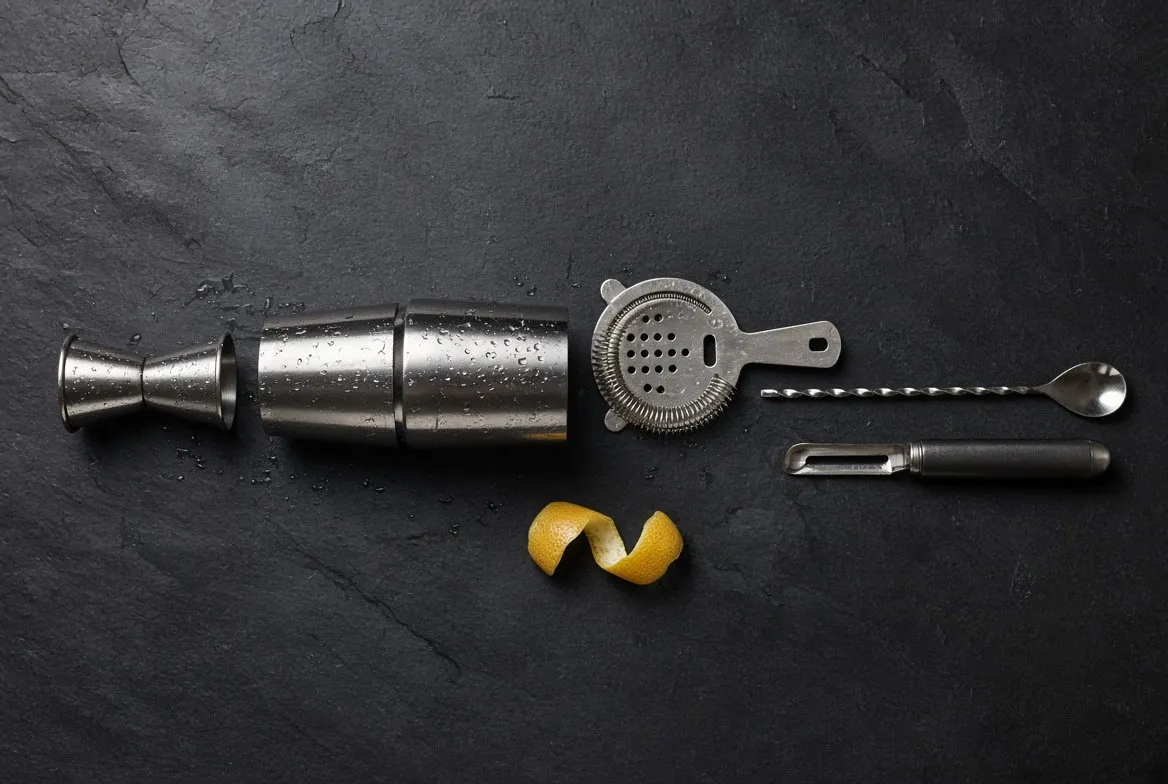
A home bar can swallow as much money as you let it. Cocktail equipment is a category designed to keep selling you things - copper this, hammered that, a specialist tool for a job a spoon already does. The truth is that a competent home gin bar needs about five tools, and once you own good versions of those, almost everything else is decoration. This is the short, honest list of what earns drawer space and what does not.
The principle that cuts through the marketing: buy tools that do a job you actually do, made well enough to last, and stop. A great Martini and a great gin sour need a jigger, a way to chill and combine, and a way to separate liquid from ice. That is most of it. The rest of the wall of barware exists to be photographed.
The five tools worth owning
-
A jigger. The single most important tool, and the one beginners skip. Cocktails are recipes, and recipes need measurement; eyeballing pours is how a balanced drink becomes a strong, sweet, or sour mess. Buy a double-ended Japanese-style jigger with internal markings (a common pairing is 30ml and 45ml or 25ml and 50ml), which gives you several measures in one tool. Stainless steel, no plastic. This is a £10-15 purchase that improves every drink you make more than a £40 gin would.
-
A mixing glass and a bar spoon, for stirred drinks - the Martini, the Negroni, anything spirit-forward served without fruit and foam. A heavy mixing glass holds the chill; a long, weighted bar spoon lets you stir smoothly without splashing. A pint glass and a long spoon will do in a pinch, but a proper mixing glass is a genuine pleasure to use and not expensive.
-
A cocktail shaker, for anything with citrus, egg, or syrup. Buy a two-piece Boston shaker (a metal tin plus a smaller tin or a pint glass) rather than the three-piece cobbler shaker with the built-in strainer. The cobbler looks classic but seals unpredictably, can freeze shut, and pours slowly through a small built-in strainer. The Boston is what bars use because it is faster, seals reliably, and is easier to clean.
-
A Hawthorne strainer, the spring-edged strainer that fits over a shaker tin, for holding back ice and fruit when you pour. Pair it with a fine mesh strainer (a small sieve works) for “double straining” shaken drinks like a Clover Club or gin sour, which removes tiny ice shards and gives a cleaner texture. Cheap and essential.
-
A good peeler or channel knife and a small sharp knife, for garnishes. Most gin drinks are finished with a citrus twist or wedge, and a clean strip of peel expressed over the surface adds aroma the drink genuinely needs. A Y-peeler you already own for vegetables works fine; a channel knife makes the thin spiral twists if you care about the look.
The gadgets to skip
A muddler is optional unless you make drinks with fresh fruit or herbs muddled in the glass - useful for a basil smash, pointless for most gin drinks. Cocktail “smoking” kits, branded ice moulds beyond a basic large-cube tray, electric stirrers, and most novelty tools are gifts people receive and never use. The most overhyped purchase is an expensive matched barware “set” in a stand - they bundle tools you will not use to pad the price, and the individual pieces are often lower quality than buying the five essentials separately.
On ice, which matters more than tools
The unglamorous truth is that ice affects your drinks more than any gadget. Bigger, harder, cleaner ice melts slower and dilutes less. A simple large-cube silicone tray for stirred and on-the-rocks drinks, and plenty of regular ice for shaking, will improve your cocktails more than a drawer of tools. You do not need a clear-ice machine; you do need enough ice and reasonably large cubes.
What to actually buy first
Start with the jigger and a Boston shaker plus Hawthorne strainer - that combination unlocks every shaken gin cocktail, which is most of the entry-level canon. Add the mixing glass and bar spoon when you start making Martinis and Negronis. The peeler you probably already own. Total outlay for a genuinely capable kit is modest, far less than a single premium bottle, and unlike a gadget set you will use every piece.
The honest verdict
A home gin bar is a five-tool problem dressed up by marketing as a fifty-tool problem. A jigger, a Boston shaker, a Hawthorne strainer, a mixing glass with a bar spoon, and a peeler will make every classic gin cocktail to a high standard. Buy those well, buy a large-cube ice tray, and ignore the rest of the wall. The money you save belongs in the bottle, not the gadget drawer.
Adjacent reading
The Best Budget Gins: Great Gin for Under £20
The best budget gins prove you do not need to spend a fortune for an excellent G&T. What to look for under £20, which styles deliver, and what to skip.
Gin Advent Calendars: The Best Way to Explore Gin This Christmas
A gin advent calendar is the smartest way to taste your way through dozens of gins. How they work, what to look for, and who each type suits best.
The Best Gins for a Singapore Sling: What to Pour in the Classic
The Singapore Sling is a complex, layered cocktail, so the gin matters. The best gins for a Singapore Sling, from bold classics to tropical-friendly bottles.