World NLD
Genever: Gin's Ancestor and the Spirit the Dutch Still Drink Differently
The Netherlands gave the world gin - then kept making its older relative. A guide to genever, its history, the styles, and why the Dutch never let go of it.
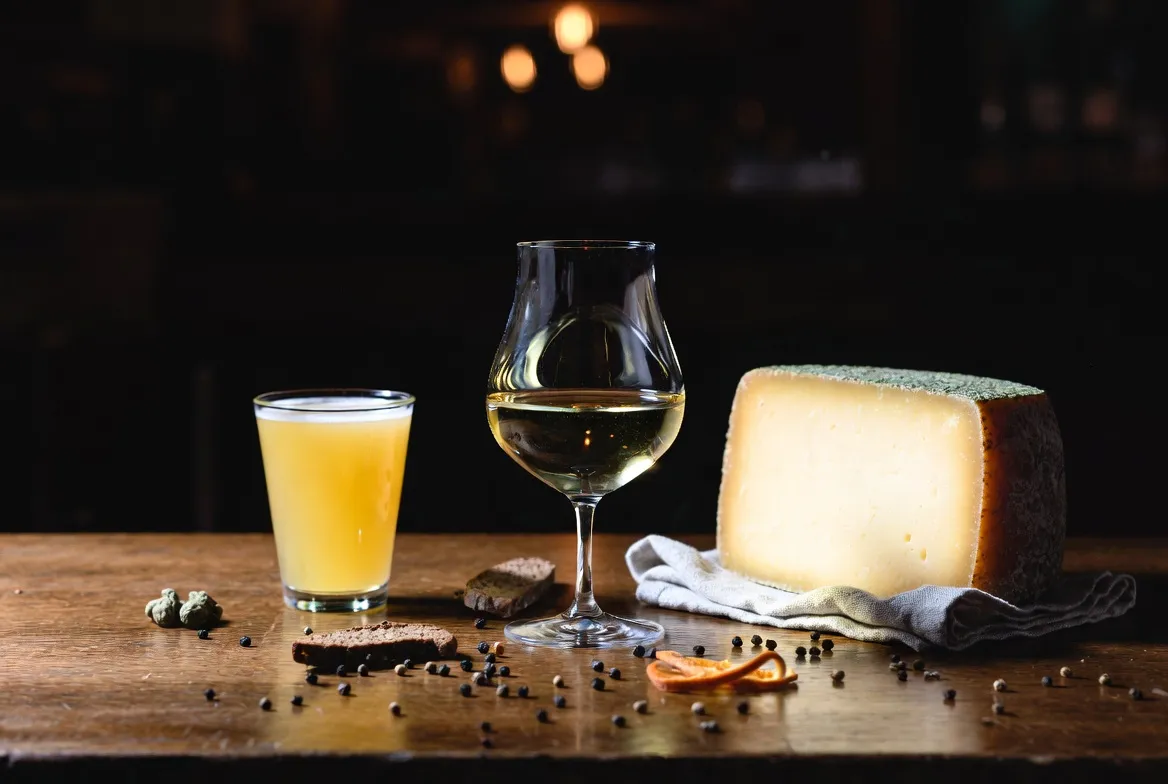
Genever is the spirit gin came from. The Dutch (and Belgian) drink that British soldiers encountered in the 17th century, took home with them, and eventually transformed into the lighter, juniper-forward spirit we now know as London Dry. But while gin became one of the world’s most international spirits, genever stayed largely a regional one - still made primarily in the Netherlands, Belgium, and small adjoining parts of France and Germany, still drunk mostly by people from those places. This is a guide to what genever actually is, where it came from, how it differs from modern gin, and why the Dutch never abandoned it for the more famous descendant.
What genever actually is
The technical definition: genever (also spelled jenever, and occasionally jonge or oude depending on style) is a juniper-flavored spirit made with a base of malt wine - a distillate of malted barley, rye, and corn that resembles unaged whisky more than the neutral grain spirit used in modern gin. The malt wine is blended with separately distilled botanical spirits, of which juniper is the most prominent. The result is a spirit that’s juniper-flavored but with a strong cereal character underneath - closer in palate to a young whisky than to a London Dry.
The European Union and United Kingdom both recognize genever as a Protected Designation of Origin. Under these rules, the name jenever (and its variants - genever, genièvre, peket) can only be used for spirits produced in the Netherlands, Belgium, two French departments (Nord and Pas-de-Calais), and two German federal states (Lower Saxony and North Rhine-Westphalia). A Dutch-style spirit made anywhere else - California, Japan, Australia - has to be called something other than genever, even if the recipe is identical.
There are two main styles:
Jonge (young). Distilled to a higher proof and containing less malt wine - by EU regulation, no more than 15% malt wine. Lighter, drier, closer to a contemporary gin in profile. Cheaper and more widely consumed in the Netherlands.
Oude (old). Contains at least 15% malt wine (often considerably more - traditional oude can be over 50%). Richer, maltier, fuller-bodied. Often aged in oak. This is the historical style; jonge emerged in the 19th century when distillers began producing lighter, cheaper variants.
The word “old” doesn’t mean aged. It refers to the older recipe style, not the time spent in barrel. Most oude genever isn’t barrel-aged at all; the ones that are usually carry an additional designation (graanjenever, korenwijn, or specific age statements).
The history - and the Sylvius myth
The popular origin story attributes genever to Franciscus Sylvius, a 17th-century Dutch physician at Leiden University. The legend: Sylvius distilled juniper berries in spirit to create a diuretic medicine in the 1650s, the locals took to drinking it for pleasure rather than therapy, and genever was born. This is essentially the story sold to tourists at the Bols museum in Amsterdam and printed on countless gin-history listicles.
The reality is more complicated. Genever predates Sylvius by centuries. The Flemish writer Jacob van Maerlant (Bruges, around 1266) described distilling juniper with wine in his book Der Naturen Bloeme - the first known Dutch-language reference to anything resembling genever. A 1522 Antwerp medical text by Phillipus Hermanni includes a recipe for distilling crushed juniper berries with wine. The Dutch word “Genever” itself first appears in print in 1582, in writing by Caspar Coolhaes - over thirty years before Sylvius was born. Philip Massinger’s English play The Duke of Milan (1623) references the spirit by name, at which point Sylvius would have been nine years old.
Sylvius almost certainly did distill some kind of medicinal juniper spirit at Leiden - he was a working physician with research interests in distillation. But he didn’t invent genever. He probably refined an existing recipe and popularized it in academic circles, which is meaningfully different from creating the category. The Nationaal Jenevermuseum in Hasselt, Belgium, states unequivocally that the spirit’s origins are in 13th-century Flanders, and the scholarly consensus supports this view rather than the Leiden myth.
The persistence of the Sylvius story is partly marketing - it gives genever a romantic single-inventor origin, which is easier to sell than “a regional spirit that evolved over four centuries across the Low Countries.” But it’s misleading history.
How genever got to England
Two military events spread the drink internationally:
The Thirty Years War (1618-1648) and the Eighty Years War (1568-1648). English soldiers fighting in the Low Countries alongside Dutch forces encountered genever and brought the habit home. Dutch soldiers reportedly drank it before combat for warming and nerve-steadying effects. The English term “Dutch courage” comes from this period, though the exact origin is contested - some sources attribute it to English soldiers adopting the Dutch pre-battle drinking practice, others to English mockery of Dutch reliance on alcohol for bravery. Either way, the connection between genever and military English drinkers was established by the mid-17th century.
The Glorious Revolution (1688) and William of Orange. When the Dutch stadtholder William of Orange took the English throne in 1689 alongside his wife Mary II, he brought genever’s status with him. William was at war with France and used trade policy as a weapon - he imposed heavy duties on French spirits (particularly brandy) and relaxed regulations on domestic English distilling. This created a vacuum that English distillers filled with locally-made juniper spirits, gradually evolving the heavier Dutch genever recipe into what became London-style gin. By the early 18th century, English gin was a distinct product, lighter and more juniper-dominant than its Dutch ancestor.
The British Gin Craze of the early-to-mid 18th century - immortalized in Hogarth’s “Gin Lane” - was technically about English gin rather than Dutch genever, but the cultural memory often blurs the two. The “mother’s ruin” that wrecked 18th-century London was descended from genever but wasn’t quite the same drink.
Why genever stayed regional
Several reasons it didn’t follow gin’s path to global dominance:
Production complexity. Real genever requires malt wine production - effectively a separate distillation of grain spirit - followed by botanical distillation and blending. This is more labor-intensive than London Dry gin, which uses pre-made neutral grain spirit as a base. Large-scale producers can’t simplify the process the way they can with gin.
Flavor profile divergence. As gin lightened over the 19th and 20th centuries, genever stayed heavier and more cereal-forward. By the time the cocktail revival happened in the 21st century, most international drinkers’ palates had been calibrated to dry gin. Genever’s malty character tasted “different” - not necessarily worse, but unfamiliar in a way that took adjustment.
Limited geographical indication. The protected status that prevents Dutch-style spirits being called genever outside the Low Countries also limits the category’s expansion. There’s no global community of producers; only Dutch, Belgian, and a handful of French and German distilleries can use the name. This contained genever’s identity to its home region.
Cocktail culture skipped it. When the cocktail movement took off in the late 19th century, gin was already well-established and easier to work with. Most classical cocktails that exist (Negroni, Martini, Gimlet, Aviation) were developed with English-style gin in mind. The “Holland gin cocktail” that Jerry Thomas documented in his 1862 cocktail manual called for genever specifically, but those drinks faded from the bar canon as gin moved to the lighter style.
The Dutch drinking traditions
Genever isn’t drunk like cocktail-bar gin. Several traditional Dutch serving practices have survived:
The tulip glass. Genever is traditionally served in a small tulip-shaped glass (sometimes called a kelkje), filled to the absolute brim - so full that you have to lean down and sip the first taste without lifting the glass. This is meant to be done with the hands behind your back, which looks faintly comic but is genuinely the local custom. The over-filling is partly an honesty signal (the host is being generous) and partly a practical measure (you don’t spill the precious spirit while transferring the glass).
Kopstoot. Literally “headbutt.” A small glass of genever served alongside a glass of pilsner beer. You drink the genever (often in one or two sips) and chase it with the beer. This is a classic Dutch café order, particularly in older brown cafés in Amsterdam, Rotterdam, and Belgian cities like Antwerp.
Borrel. The pre-dinner drink ritual. Genever, often jonge, served chilled (sometimes from a freezer-cold bottle), accompanied by bitterballen, kaas, or other snacks. The equivalent of an Italian aperitivo, but with genever instead of Aperol or Campari.
Genever with old gouda. A specific food pairing. The malty character of oude genever works against aged gouda’s caramel sweetness. This is one of the genuinely sophisticated genever pairings - more so than cocktail use.
None of these traditions involve mixing the spirit. Genever is generally drunk neat or with food, not as a base for stirred or shaken drinks. When used in cocktails, it’s typically in pre-Prohibition recipes that specifically call for “Holland gin” or “genever” rather than London Dry.
Producers worth knowing
The contemporary Dutch and Belgian genever industry is small but includes several producers of historical significance:
Bols (Amsterdam). Established 1575, claimed to be the world’s oldest distilled spirits brand still in operation. Began genever production in 1664. Bols Genever (the contemporary product, made from a recreated 1820 recipe) is the most internationally available genever and the easiest starting point for new drinkers. Triple-distilled with over 50% malt wine.
Zuidam (Baarle-Nassau). A smaller, family-owned distillery making oude-style genever with traditional methods. Zuidam Zeer Oude Genever is one of the more respected craft genevers in the contemporary market.
Rutte (Dordrecht). Established 1872. Makes a range of genevers and Dutch gins, including specific historical recreations. Rutte Old Simon Genever is well-regarded among bartenders working with classical cocktails.
Filliers (Belgium). Belgian rather than Dutch - one of the largest Belgian genever producers, established 1880. Makes both traditional and aged variants.
Smaller craft Dutch producers. A small revival movement has produced new genever distilleries in the 2010s and 2020s, particularly Onder de Boompjes (Schiedam) and several Amsterdam-based start-ups. Schiedam, southwest of Rotterdam, was historically the center of Dutch genever production and still has more historic distilleries per square kilometer than anywhere else in the Netherlands.
How to drink genever (if you’re starting fresh)
For a first taste:
-
Buy a bottle of Bols Genever. It’s the most widely available, reasonably priced ($30-35 in the US, £25-30 in the UK), and produces a representative example of the contemporary Dutch style.
-
Serve it the Dutch way first. Chill the bottle. Pour a small measure (25-30ml) into a small glass, ideally tulip-shaped. Drink it neat, in slow sips, paying attention to the malt character and the way the juniper integrates with the grain. Don’t approach it as if it were gin - it isn’t.
-
Try it with food. Aged gouda, smoked herring, or a piece of dark rye bread will all work well alongside oude-style genever. This is closer to how the Dutch actually consume the spirit than cocktail use.
-
Then experiment with cocktails. Pre-Prohibition drinks that specifically call for “Holland gin” - the Holland House cocktail, the Improved Holland Gin Cocktail, the original John Collins (made with Holland gin rather than London gin) - all benefit from genever’s weight in ways that London Dry gin can’t quite replicate.
If you want to go deeper: visit Amsterdam and find Wynand Fockink, a 17th-century proeflokaal (tasting house) tucked behind Dam Square. They serve dozens of genevers and Dutch liqueurs in the traditional way, with the over-filled tulip glass and the hands-behind-the-back first sip. It’s one of the few places that maintains the full traditional service. The Bols Experience museum is also worthwhile, though more touristy and less authentic to the everyday drinking culture.
The honest verdict
Genever is one of the most historically important spirits in the Western drinks tradition - gin doesn’t exist without it - but it remains stubbornly regional in a way that’s somewhat puzzling. The drink is good. The traditions around it are charming. The producers are serious. And yet it remains primarily a Dutch and Belgian thing, occasionally adopted by cocktail historians abroad but rarely by general drinkers.
Part of this is just market dynamics: gin’s lighter style won the international competition for palate space, and there’s limited room in the average drinker’s life for a second juniper spirit. Part of it is the protected geographical indication restricting category expansion. Part of it is simply that the Dutch never tried particularly hard to export the drink - genever’s local strength meant there was less commercial pressure to globalize it.
For a serious drinker, this regional quality is part of the appeal. Going to Amsterdam and ordering a kopstoot at a brown café is one of the genuine, untransformed traditional drinking experiences left in Western Europe - largely unchanged from how the same drink was consumed three hundred years ago. Most national drinking traditions have been either internationalized into unrecognizability or commercialized into kitsch. Genever has mostly avoided both. The Dutch still drink it the way their ancestors did, in small tulip glasses, with the bottle from the freezer, paired with cheese and pickled herring. That’s worth experiencing on its own terms, not as a substitute for gin.
Tagged
Adjacent reading
Irish Gin: Botanicals From the Atlantic Edge
Ireland's gin scene has exploded, built on native botanicals and Atlantic character. The distilleries, the style, and the Irish bottles worth seeking out.
Scottish Gin: How Scotland Quietly Became a Gin Powerhouse
Scotland makes far more gin than whisky by volume, and some of the best in the world. The distilleries, the foraged botanicals, and the bottles to know.
Indian Gin and the New Asian Craft Wave
India produces the cardamom, coriander, and citrus for gin worldwide. Why it took until the 2020s to make its own, and which producers matter.