Cocktails GBR
The Gimlet: A Sailor's Cocktail and the Lime Cordial Argument
Gin, lime cordial, no ice in the original. The Royal Navy cocktail that survived two centuries and now divides modern bartenders over whether to use fresh lime.
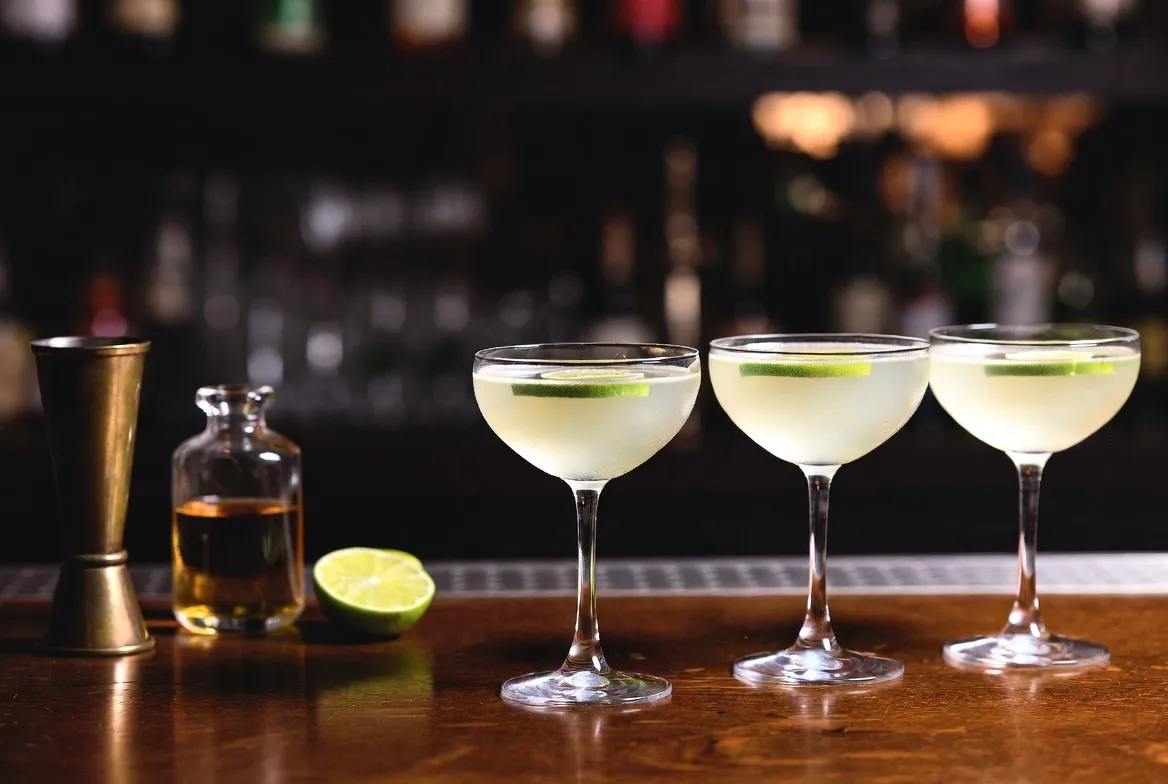
The gimlet is a contested drink. The original recipe - gin and Rose’s Lime Cordial, in roughly equal parts, served without ice or at most with a small amount of dilution - is straightforward. Modern bartenders, almost universally, want to replace the cordial with fresh lime juice and simple syrup. The result is technically a “fresh gimlet” or “modern gimlet” - and it tastes different from the historical drink. This is a guide to both, why the original recipe matters, and the practical case for each version.
The historical version
The original gimlet comes from the Royal Navy in the late 19th century. The story, which is well-documented: British naval officers serving in tropical climates needed to consume lime juice to prevent scurvy (vitamin C deficiency). The standard daily lime ration was a difficult drink to enjoy - undiluted citrus juice gets old quickly when you have to drink it every day for six months at sea.
In 1867, Lauchlin Rose - a Scottish entrepreneur - patented a process for preserving lime juice with sugar rather than alcohol. The result was Rose’s Lime Cordial, a sweetened, shelf-stable lime concentrate that could be transported on Naval ships without spoiling. Rose’s Lime Cordial became the Navy’s standard daily lime ration, and shortly after that, sailors and officers found that it mixed perfectly with gin - which was the Navy’s other daily-issue spirit (officers received gin, ratings received rum).
The gimlet was the resulting drink: gin mixed with Rose’s Lime Cordial, roughly in 50/50 proportion, often served at room temperature or with whatever cooling was available aboard ship.
The name “gimlet” probably comes from the cocktail being named after a small carpentry tool - a gimlet is a hand-operated drill for boring holes - though the etymology is uncertain. Another origin story attributes it to a Royal Navy surgeon named Sir Thomas Gimlette (1857-1943), who reportedly promoted the lime cocktail as a way to ensure officers consumed their vitamin C. Both stories are plausible; neither is conclusively documented.
The classical recipe:
- 50ml gin (Plymouth, traditionally, but any London Dry)
- 50ml Rose’s Lime Cordial
- Shaken with ice, strained into a coupe
- No garnish or a small lime wheel
That’s it. Two ingredients, no fresh juice, no syrup, no garnish. The Naval origin gives it integrity - this was the actual cocktail consumed by Royal Navy officers in the 1880s and 1890s, and it survived essentially unchanged into the cocktail manuals of the early 20th century.
The modern argument
Beginning in the 1990s and intensifying through the 2000s, modern cocktail bars began rejecting Rose’s Lime Cordial in favor of fresh lime juice and simple syrup. The rationale:
Rose’s Lime Cordial is too sweet. The contemporary recipe uses high-fructose corn syrup as the primary sweetener (in the US) or sugar (in the UK), and the result is sweeter than most contemporary bartenders prefer their drinks.
Rose’s flavor isn’t really lime anymore. The product has changed over time. Original 19th-century Rose’s used fresh lime juice as the primary ingredient. Modern Rose’s contains lime juice but also lime concentrate, citric acid, and various preservatives. The flavor is more “lime-flavored” than “lime.”
Fresh ingredients are objectively better. This is the orthodox cocktail-revival position: better ingredients produce better drinks. Fresh-squeezed lime juice has more aromatic complexity than any cordial; combined with quality simple syrup, it gives the bartender more control over the final drink.
The modern recipe:
- 50ml gin
- 22.5ml fresh lime juice
- 22.5ml simple syrup (1:1)
- Shaken with ice, strained into a coupe
- Garnish: lime wheel or twist
This is what you’ll get if you order “a gimlet” at most serious cocktail bars in major Western cities today.
The case against modernization
Here’s where the argument gets interesting. The modern fresh-lime gimlet tastes different from the historical Rose’s version. Specifically:
It’s drier and more acidic. Fresh lime juice has stronger acidity than Rose’s, and the typical modern recipe uses less sweetener proportionally.
It’s brighter and more aromatic. Fresh juice gives top notes that cordial doesn’t replicate.
It’s more like a daiquiri. A modern fresh-lime gimlet is essentially a gin daiquiri (gin, lime, sugar - same template as the rum daiquiri).
The argument from cocktail traditionalists: those changes aren’t improvements. They’re a different drink. The historical gimlet has a specific cordial-sweet, slightly artificial-lime, slightly viscous character that fresh-juice versions can’t replicate. If you order a gimlet expecting that character and receive a gin daiquiri, you’ve been given something else.
Several prominent bartenders and cocktail writers (most notably the British bartender Dale DeGroff and the writer David Wondrich) have argued specifically that the gimlet should be made with Rose’s Lime Cordial - or at the very least, with a properly-prepared homemade lime cordial that captures Rose’s character. Their position: the cordial is the gimlet. Without it, you have a different drink that happens to share the name.
How to make a homemade lime cordial
For drinkers who want the gimlet character but don’t want to use commercial Rose’s, several modern bartenders make their own lime cordial. The basic recipe:
- 500g lime peels (peels only, no white pith)
- 500g sugar
- 500ml fresh lime juice
- 100ml hot water (for dissolving sugar)
Layer the lime peels with sugar in a container, cover, and let sit for 12-24 hours. The sugar will extract the citrus oils from the peels (a process called “oleo-saccharum”). After the rest, combine with hot water to dissolve the remaining sugar, then add the fresh juice. Strain and bottle.
The result is a homemade lime cordial that has more complexity than commercial Rose’s (oleo-saccharum brings out the lime oil character beautifully) but maintains the cordial-sweet structure. A gimlet made with homemade lime cordial tastes more like the historical drink than either commercial Rose’s or fresh-juice versions.
How to drink a gimlet
The decision tree:
For the historical experience:
- Use Rose’s Lime Cordial (commercial)
- 1:1 with gin, shaken with ice, strained into a chilled coupe
- This is what naval officers drank in 1890. It’s sweet, slightly cordial-flavored, and authentically vintage.
For the modern bartender’s version:
- Use fresh lime juice and simple syrup
- 50ml gin, 22.5ml lime juice, 22.5ml simple syrup
- This is what most serious cocktail bars serve. Cleaner, more acidic, more like a daiquiri.
For the best of both:
- Make homemade lime cordial (recipe above)
- 1:1 with gin (or 50:30 gin to cordial for a drier version)
- Captures the cordial-sweet character with much better lime complexity than commercial Rose’s
The gin matters. Use a juniper-forward London Dry (Plymouth, Tanqueray, Beefeater) rather than a contemporary floral gin. The gimlet is a straightforward, classical drink that wants a classical gin. Hendrick’s or Roku will produce a gimlet that tastes mostly of cucumber-and-rose or yuzu-and-sansho rather than of gin and lime.
Variations worth knowing
The Vesper-style Gimlet. Replace half the gin with vodka. Produces a slightly less herbal, more neutral drink. This is sometimes preferred for spring/summer drinking when you want something lighter than a full gin gimlet.
The Spanish Gimlet. Add a small amount of Manzanilla sherry (10-15ml) to a fresh-lime gimlet. The sherry adds salty, slightly oxidative character. Surprisingly good with seafood.
The Bramble-style Gimlet. Made with fresh lime juice, simple syrup, gin, and a dash of crème de mûre (blackberry liqueur). Technically a different drink (the Bramble) but the structural template is gimlet-adjacent.
The “Big Sleep” Gimlet. Raymond Chandler famously wrote about gimlets in The Long Goodbye (1953), suggesting they should be “made with equal parts gin and Rose’s Lime Juice and nothing else.” Chandler was firmly on the cordial side of the argument, and his version is the historical default.
The honest verdict
The gimlet is a drink with two distinct correct preparations. The historical Rose’s-and-gin version is the original and is what every cocktail manual through the mid-20th century documented. The modern fresh-lime version is what most serious bars now serve and is generally a more elegant drink by contemporary standards.
Neither is wrong. They’re different drinks that share a name. If you’re making cocktails at home, try both and decide which you prefer for which occasions. The Rose’s version is more nostalgic, more cordial-sweet, more obviously vintage. The fresh-lime version is brighter, drier, more contemporary.
For a beginner: start with the fresh-lime modern version. It’s the most accessible interpretation and the one most cocktail bars serve. Move to the Rose’s version once you’ve understood the cocktail’s structure.
For a cocktail-history enthusiast: make at least one Rose’s-and-Plymouth gimlet to taste what naval officers actually drank in 1890. It’s worth understanding the drink in its original form before deciding which version you prefer.
Either way, the gimlet is one of the most enduring two-ingredient cocktails in any tradition - a drink that has survived two world wars, the dark ages of mid-century bartending, the cocktail revival, and the fresh-ingredient movement, and is still being served in serious bars across the world. That kind of survival is itself an argument for the drink’s quality.
Adjacent reading
The Aviation: A Cocktail That Disappeared and Came Back Differently
Gin, maraschino, lemon, and violet. The pre-Prohibition cocktail that vanished and returned with a missing ingredient. Now made two ways.
The Martini: Wet, Dry, and the Reverse That Almost Vanished
The simplest cocktail in the world is the hardest to discuss. Three ratios, what each does to the drink, and which one bartenders argue about most.
The French 75: One Cocktail, Three Origin Stories
Gin, lemon, sugar, and champagne - but the recipe and the origin are both contested. Three competing claims for one of the great cocktails.