Guides
Stirred or Shaken: When to Use Each Cocktail Technique
James Bond was wrong. Here's the actual rule for when to stir a cocktail and when to shake it, why it matters, and what each technique does to the drink.
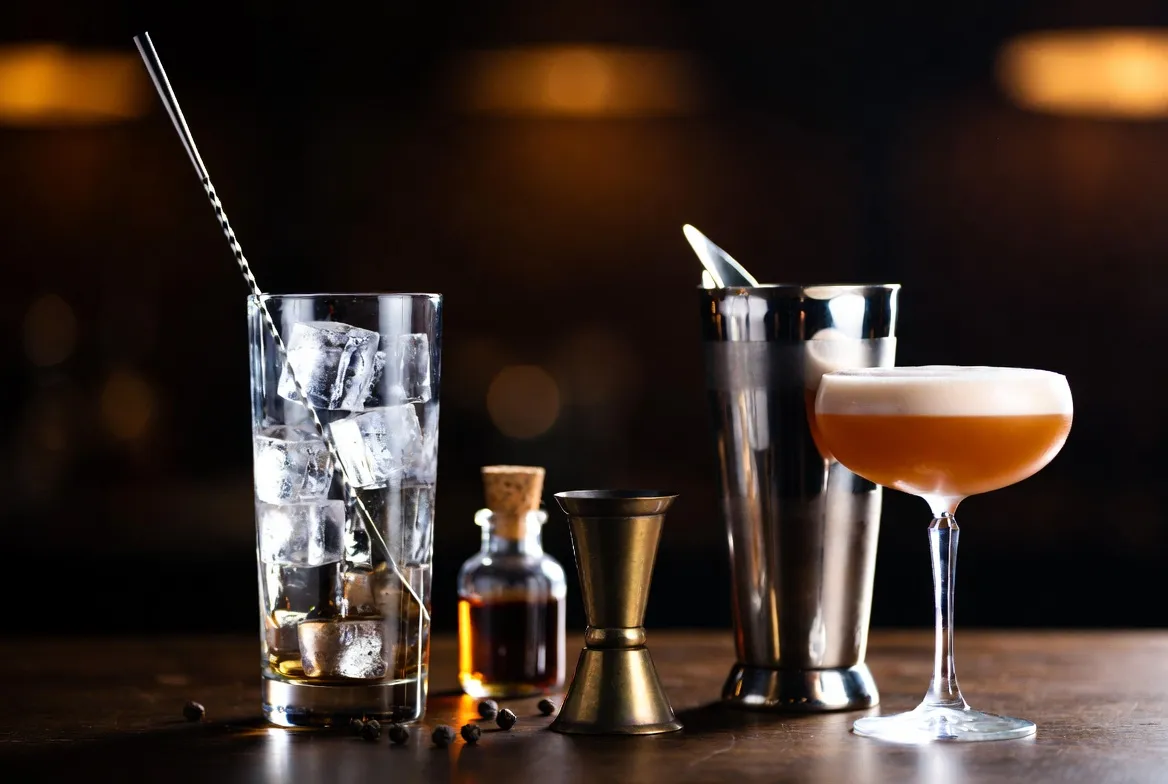
“Shaken, not stirred” is the most famous line in cocktail history and one of the most wrong. James Bond’s preferred technique for his vodka martini violates the standard rule that classically-trained bartenders follow, and the violation isn’t a matter of taste - it produces a different drink, slightly worse by most technical measures. This is the actual rule for when to stir cocktails and when to shake them, why each technique exists, and what happens to the drink in each case. Once you know the rule, you’ll never have to think about it again.
The basic rule
The classical bartender’s rule, taught in every serious cocktail education program:
Stir cocktails made entirely of spirits, liqueurs, and bitters.
Shake cocktails containing juices, syrups, dairy, or egg whites.
That’s it. Almost every cocktail in the canon follows one of these patterns, and the technique is determined by the ingredients.
A martini (gin + vermouth, both spirits) is stirred. A daiquiri (rum + lime juice + simple syrup) is shaken. A negroni (gin + Campari + vermouth, all spirits) is stirred. A French 75 (gin + lemon juice + simple syrup + champagne) is shaken. The technique follows the ingredients.
The Bond martini violates this because the vodka martini fits the stirred category (vodka + vermouth, both spirits), but Bond requests it shaken. He’s drinking a slightly more dilute, slightly less clear martini than the technique calls for.
What stirring does
Stirring a cocktail with ice is a gentle, controlled process. The drink is combined and chilled through the slow movement of liquid past ice, without any aggressive agitation. The results:
-
The drink chills. The ice cools the liquid; you stop when the drink reaches the right temperature (around -1 to -3°C for a properly stirred cocktail).
-
The drink dilutes mildly. Some ice melts during the 30 seconds of stirring, adding a small amount of water that softens the alcohol’s edge. Typical dilution from proper stirring is 20-25% of the final drink’s volume.
-
The drink stays clear. No bubbles, no cloudiness, no air introduction. A properly stirred martini is crystal clear when poured.
-
The texture stays silky. The liquid moves smoothly past the ice without violent agitation, preserving the spirit’s natural viscosity.
The technique is appropriate for spirit-only drinks because those drinks are valued for their clarity, smoothness, and pure spirit character. Aggressive shaking would damage those qualities for no real benefit.
What shaking does
Shaking a cocktail with ice is an aggressive, high-energy process. The drink is combined through violent agitation against ice cubes in a sealed container. The results:
-
The drink chills faster and more thoroughly. Shaking is significantly more efficient at cooling than stirring; the same drink will reach lower temperatures in a shorter time.
-
The drink dilutes more. More aggressive contact with ice means more melting; typical dilution from proper shaking is 25-35% of the final drink’s volume.
-
The drink aerates. Air bubbles get incorporated into the liquid through the shaking motion, giving the finished drink a slightly cloudy appearance and a foamy texture on top.
-
Juice and syrup integrate completely. This is the critical purpose of shaking. Citrus juices and simple syrups don’t mix evenly with spirits through gentle stirring - you need violent agitation to fully emulsify them. Without shaking, you’d get an uneven drink with juice settling at the bottom.
-
Egg whites foam. Cocktails containing egg white (whiskey sour, gin fizz, Ramos gin fizz) require shaking to incorporate air into the egg protein, creating the characteristic foam top.
The technique is appropriate for drinks with non-spirit ingredients because those drinks need full integration that stirring can’t achieve, and they don’t depend on clarity or perfect texture (the slight cloudiness from shaking is fine, sometimes even desirable, in citrus-based cocktails).
Why Bond was wrong (in technical terms)
A vodka martini contains vodka and dry vermouth - both spirits. The classical technique is stirring.
Shaking a martini produces:
-
A more dilute drink. The extra dilution from shaking is unwelcome in a martini, where the drinker wants the spirit character to dominate.
-
A cloudier drink. Air bubbles introduced by shaking make the martini slightly opaque. A proper martini is supposed to be clear.
-
A colder drink (briefly). Shaking gets the drink colder faster than stirring, but the gain is minor and the drink warms quickly in the glass anyway. Not worth the loss in dilution and clarity.
-
A slightly bruised character. The aggressive agitation breaks down some of the spirit’s smoothness in subtle ways. “Bruised” is the traditional bartender term.
A shaken vodka martini isn’t ruined - it’s drinkable, and many people genuinely prefer it. But by classical standards, it’s slightly worse than the stirred version. Bond’s preference is fiction creating fashion; serious cocktail bars still stir.
The list of stirred cocktails
For reference, the most common cocktails that should be stirred:
- Martini (gin or vodka + vermouth)
- Negroni (gin + Campari + sweet vermouth)
- Manhattan (whiskey + sweet vermouth + bitters)
- Old Fashioned (whiskey + sugar + bitters, served over ice)
- Boulevardier (whiskey + Campari + sweet vermouth)
- Martinez (gin + sweet vermouth + maraschino + bitters)
- Vesper (gin + vodka + Lillet)
- Hanky Panky (gin + sweet vermouth + Fernet-Branca)
- Vieux Carré (whiskey + cognac + sweet vermouth + Bénédictine + bitters)
Note: all of these contain only spirits, liqueurs, and bitters. No juice, no syrup, no fresh ingredients.
The list of shaken cocktails
Common shaken cocktails:
- Daiquiri (rum + lime juice + simple syrup)
- Whiskey Sour (whiskey + lemon juice + simple syrup, optionally egg white)
- Margarita (tequila + lime juice + triple sec)
- Gimlet (gin + lime juice + simple syrup - the modern version)
- French 75 (gin + lemon juice + simple syrup + champagne) - shake everything except champagne, then top
- Cosmopolitan (vodka + Cointreau + lime juice + cranberry)
- Sidecar (cognac + Cointreau + lemon juice)
- Aviation (gin + lemon juice + maraschino + crème de violette)
- Ramos Gin Fizz (gin + lime + lemon + orange flower water + cream + egg white + sugar)
- Bramble (gin + lemon + simple syrup + crème de mûre)
Note: all of these contain at least one non-spirit ingredient (citrus juice, syrup, cream, or egg white).
The edge cases
Some cocktails don’t fit cleanly into either category:
The Pisco Sour (pisco + lime + sugar + egg white): always shaken because of egg white.
The Mojito (rum + lime + sugar + mint + soda water): muddled, not shaken or stirred. Mint is muddled with sugar and lime, rum is added, then topped with soda water.
The Mint Julep (bourbon + sugar + mint + crushed ice): muddled (mint and sugar), then bourbon is added and the drink is built directly in the glass with crushed ice.
The Old Fashioned: technically stirred, but often built directly in the glass without a separate mixing vessel. Either approach is correct.
Champagne Cocktail (champagne + sugar cube + bitters + lemon peel): no stirring or shaking - the sugar cube dissolves slowly into the champagne in the glass.
For most cocktails, though, the rule holds.
How to actually stir
Proper stirring technique:
-
Use a mixing glass. A Japanese-style mixing glass (glass beaker shape) or an Old Fashioned glass works. Don’t stir in the serving glass.
-
Fill with ice. At least half-full, ideally three-quarters. Cold ice in volume is the key.
-
Pour the ingredients. All the spirits/vermouth/bitters that make up the drink.
-
Insert a long bar spoon. The traditional Japanese-style spoon with a long twisted handle works best. A regular long spoon is acceptable.
-
Stir for 30 seconds. The motion is gentle circular movement of the spoon through the ice. Count to 30, not to 5. Don’t rush.
-
Strain into a chilled glass. Use a julep strainer or Hawthorne strainer to hold back the ice while pouring.
Common mistakes: not enough ice, stirring too aggressively (it should be gentle), stirring too briefly, not pre-chilling the serving glass.
How to actually shake
Proper shaking technique:
-
Use a cocktail shaker. The two main types are Boston shakers (two-piece - large tin and glass or smaller tin) and cobbler shakers (three-piece with built-in strainer). Boston shakers are professional standard; cobblers are easier for home use.
-
Fill the small side with ice first. Cubes, not crushed.
-
Pour all the ingredients in. Spirits, juices, syrups, optionally egg whites.
-
Seal the shaker tightly. Test the seal before shaking.
-
Shake hard for 10-15 seconds. Up and down, fast, with energy. The shaker should feel cold to the touch and you should hear the ice breaking up inside.
-
Open carefully (away from your face). Strain into a chilled glass using the shaker’s built-in strainer or a Hawthorne strainer.
Common mistakes: not enough ice, shaking too gently (this isn’t stirring - real shaking is aggressive), not pre-chilling the glass, opening the shaker dramatically toward your face.
Dry shake (for egg white drinks)
For cocktails containing egg white, there’s a refinement called the “dry shake”:
- Add all ingredients to the shaker (including egg white) without ice.
- Shake for 10 seconds without ice. This emulsifies the egg white into the spirit and develops foam.
- Add ice.
- Shake for another 10-15 seconds normally.
- Strain.
The dry shake produces dramatically better egg white foam than a single shake with ice. Worth knowing if you make whiskey sours or Ramos gin fizzes at home.
The honest takeaway
The stir-or-shake question is one of the few cocktail technique questions with a clear technical answer. The rule isn’t fashion or tradition - it’s a function of what each technique does and which drinks benefit from which.
If you want to make consistently good cocktails at home: learn to stir properly (most home bartenders skip this; the difference between a well-stirred martini and a poorly-stirred one is significant), learn to shake aggressively when shaking is required, and follow the ingredient-based rule above.
Bond’s “shaken, not stirred” line works as fiction because it sounds decisive and slightly transgressive. It doesn’t work as cocktail advice. A real bartender takes either approach based on the drink, not based on personality. And if you’re at a bar where the bartender asks “stirred or shaken?” for a martini, you’re at a bar that’s optimizing for guest preference over technique - which is fine for service, but not how the drink is supposed to be made.
For your home bar: stir martinis, negronis, Manhattans, and any drink that’s all spirits. Shake daiquiris, gimlets, sours, French 75s, and any drink with juice or syrup. That’s the whole rule. Everything else is detail.
Tagged
Adjacent reading
How to Garnish a Gin Cocktail: Beyond the Lime Wheel
Garnish provides most of a cocktail's aroma, and aroma is most of flavor. How to match garnishes to your gin's botanicals - and the common mistakes.
How to Make a Proper Gin and Tonic at Home
The right glass, the right ice, the right ratio, the right tonic, the right garnish. Five elements that separate a great G&T from a bad one - explained simply.
How to Read a Gin Label: What the Words Actually Mean
London Dry, navy strength, small batch, craft. A guide to which gin label terms are legally regulated and which are just marketing decoration.