Guides
Is Gin Fattening? Gin and Calories, Honestly Explained
How many calories are really in gin, where they come from, how the mixer changes everything, and how gin compares to wine and beer. The honest answer.
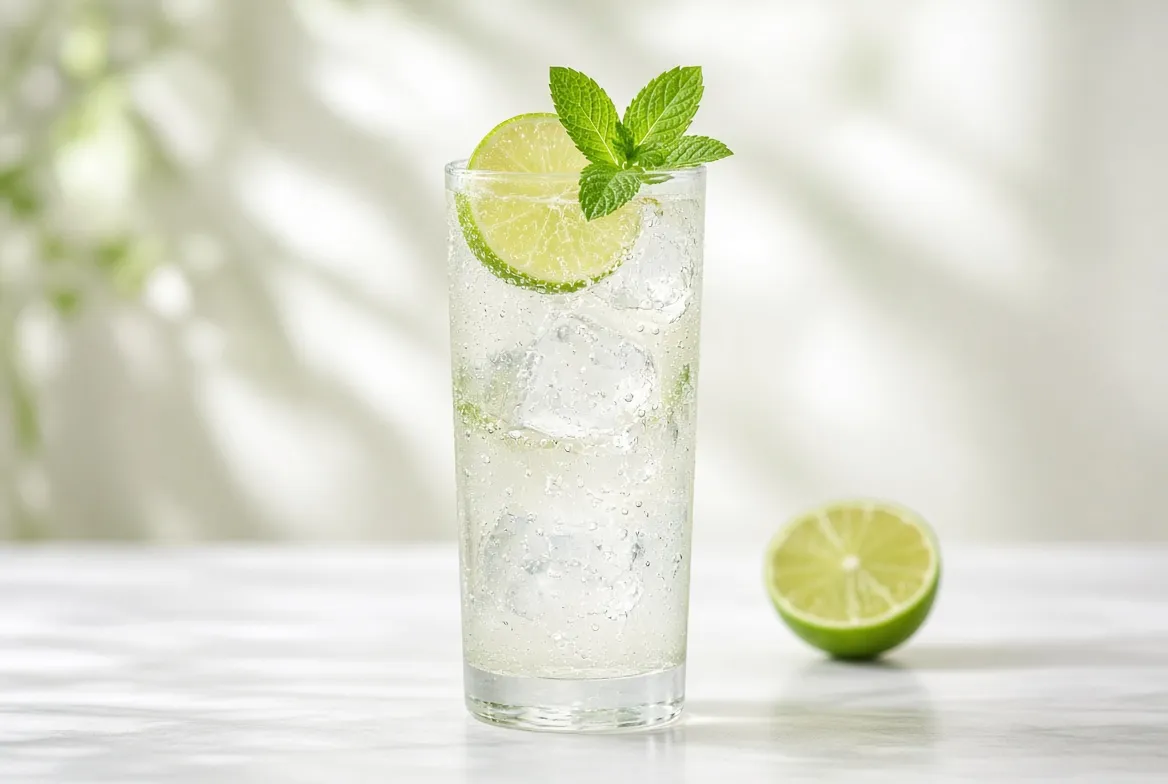
It is one of the most-asked questions about gin, and the answer is more reassuring than most people expect: gin itself is one of the lower-calorie spirits, and a gin and tonic can be one of the lighter alcoholic drinks you can order - or one of the heavier ones, depending almost entirely on what you mix it with. The confusion comes from lumping the gin and the mixer together. Separate them, and the picture gets clear. Here is the honest breakdown of gin and calories.
A quick, sensible caveat first: this is general information, not diet advice, and gin is still alcohol, which carries its own health considerations regardless of calories. With that said, if you are simply curious how your drink stacks up, here is how it actually works.
How many calories are in gin?
Plain gin is surprisingly light. A standard 25ml single measure of gin at 40% ABV contains roughly 55 calories; a 50ml double, around 110. Those calories come almost entirely from the alcohol itself.
Crucially, a classic unsweetened gin - a London Dry like Tanqueray, Beefeater, or Sipsmith - contains no sugar, no carbohydrates, and no fat. None. So gin is not “fattening” in the sense people usually mean; there is nothing in a dry gin but alcohol and water once it is distilled. That already puts it ahead of many drinks.
Where the calories actually come from
Two things drive the calorie count of a gin drink: the alcohol, and the mixer. The alcohol is fixed - about 55 calories per single measure - and there is not much you can do about it short of pouring less. The mixer, however, is where the real difference is made, and it is almost always the bigger factor.
-
Regular tonic water is the hidden culprit. Standard tonic is sweetened with sugar and adds roughly 60 to 80 calories per serving - often more than the gin itself. A gin and tonic made with full-sugar tonic lands around 120 to 135 calories, and most of that is the tonic.
-
Slimline or light tonic changes everything. It has little to no sugar and adds only a few calories, bringing a gin and slimline tonic down to roughly 55 to 60 calories - essentially just the gin.
-
Soda water is effectively zero calories, so a gin and soda with a squeeze of lime is about as light as a gin drink gets.
So the single biggest lever on a gin drink’s calories is not the gin - it is whether you choose regular tonic, slimline tonic, or soda.
How gin compares to wine and beer
This is where gin looks genuinely good. A 175ml glass of wine contains roughly 130 to 160 calories. A pint of beer is around 180 to 210. A gin and slimline tonic, at roughly 55 to 60 calories, is markedly lighter than either - and even a regular gin and tonic, at around 120 to 135, is broadly comparable to a glass of wine.
That is why gin, specifically with a low-calorie mixer, is so often the drink of choice for people watching what they consume. It is not a health food, but among alcoholic options it is one of the lighter ones.
The exception: sweetened and flavoured gins
There is one big caveat. Everything above applies to classic, unsweetened gin. Sweetened, flavoured, and pink gins are a different story - many have sugar added, which pushes their calorie count up and gives them actual carbohydrates. The same goes for sloe gin, which is a sweetened liqueur rather than a true gin. If you are counting calories, a dry, unsweetened gin is the lighter choice, and the brightly coloured sweet ones are the ones to watch.
How to keep a gin drink light
If a lower-calorie gin drink is the goal, the recipe is simple: use a classic unsweetened gin, mix it with slimline tonic or soda water rather than regular tonic, and garnish with fresh citrus or herbs rather than anything sweet. That combination gives you a genuinely light drink - around 55 to 60 calories - that tastes every bit as good as the full-sugar version. Measure your pour, too; the calories are in the alcohol, so a generous free-pour adds up faster than a measured single.
The honest takeaway
Gin is not fattening in itself - a classic dry gin is pure alcohol with no sugar, fat, or carbs, at about 55 calories a measure. Whether your gin and tonic is light or not comes down overwhelmingly to the mixer: slimline tonic or soda keeps it among the lightest alcoholic drinks there is, while regular tonic roughly doubles it, and sweetened or flavoured gins add more still. Compared with wine or beer, a gin and slimline tonic is a genuinely lighter choice. None of which changes the fact that it is alcohol and best enjoyed in moderation - but if you were worried the gin was the problem, it almost certainly is not. It is the tonic.
Adjacent reading
What Does Gin Actually Taste Like? A Guide for the Curious
What gin really tastes like, from the piney hit of juniper to citrus, spice and florals. The flavours to expect, why styles differ, and how to taste it.
Classic vs Contemporary Gin: Which Should You Actually Drink?
Juniper-forward London Dry or soft modern gin? The real difference between classic and contemporary styles, which suits which drink, and which to buy.
How to Store and Serve Gin: The Practical Answers, Without the Myths
How to store gin, how long it lasts, the freezer question, and the right way to serve it. The practical answers to the questions people actually ask.