Guides
Butterfly Pea Gin: The Colour-Changing Gin, Explained
Butterfly pea gin starts deep blue and turns pink before your eyes when you add tonic or citrus. How it works, why it is real, and how to drink it.
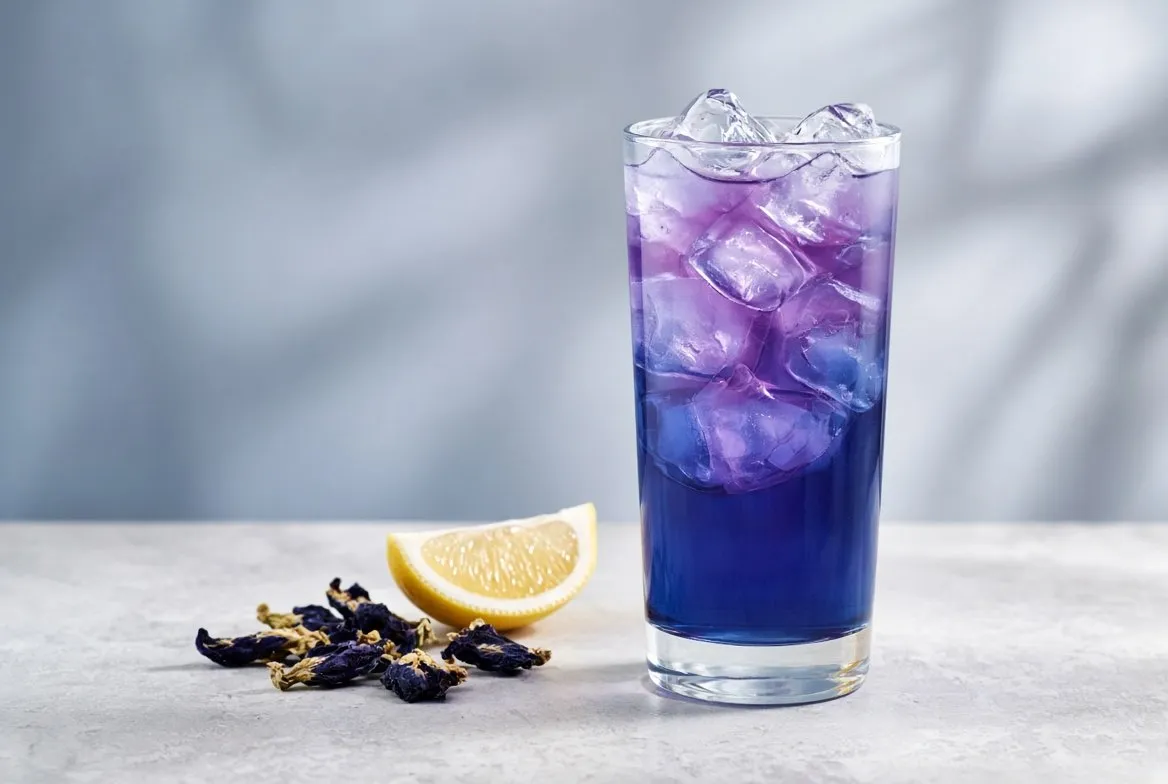
Few drinks have a party trick as good as butterfly pea gin. It pours a deep, striking blue, and then, the moment you add tonic water or a squeeze of citrus, it transforms before your eyes into a soft pink or purple. It looks like chemistry-set magic, it is genuinely mesmerising, and - crucially - it is completely real and entirely natural. No artificial dye, no gimmick powder: the colour and the change both come from a single flower. This is how butterfly pea gin works, why it does that, and how to drink it.
Butterfly pea gin has become a favourite in Southeast Asia and increasingly worldwide, both for its looks and as a genuinely good aromatic gin. Singapore’s Brass Lion makes a well-known one, and it has become something of a signature of the region’s modern gin scene. But the flower behind it has been used across Asia for centuries, long before anyone put it in gin.
What makes it blue
The colour comes from the butterfly pea flower (Clitoria ternatea), a vivid blue blossom native to Southeast Asia. Steeped in gin, the flower releases a deep, natural blue pigment - the same pigment that has long been used to colour rice, drinks, and desserts across Thailand, Malaysia, and beyond. It is a natural food colouring, not a chemical one, which is why butterfly pea gin can make such a dramatic blue without any artificial additives.
So the blue is simply the flower’s own pigment infused into the spirit. That part is straightforward. The colour change is where it gets clever.
Why it changes colour
Here is the science, kept simple. The pigment in butterfly pea flowers is pH-sensitive, meaning it changes colour depending on how acidic its surroundings are. In the neutral gin it is blue. Add something acidic - tonic water (which is mildly acidic) or a squeeze of lemon or lime - and the increase in acidity shifts the pigment from blue toward purple and then pink. The more acidic you make it, the pinker it goes.
This is the same principle behind a classic school science experiment with red cabbage, which also changes colour with pH. In butterfly pea gin it becomes a genuinely beautiful piece of tableside theatre: pour the blue gin, add the tonic, and watch it bloom into pink in the glass. It never gets old, and it is entirely natural.
Does it taste different?
The butterfly pea flower is prized mostly for colour rather than strong flavour - it has a very mild, earthy, faintly floral, tea-like note, and it does not dramatically change the taste of the gin. So a good butterfly pea gin lives or dies on the gin underneath the colour. The best ones, like Brass Lion’s, are built on a proper aromatic gin with real botanicals, so you get a genuinely good drink that also happens to perform. Cheaper novelty versions can lean entirely on the colour and neglect the gin, which is the thing to watch for - this should be a good gin first and a spectacle second.
How to drink it (and show it off)
Butterfly pea gin is made for a gin and tonic, because the serve is also the magic trick:
- Pour the deep blue gin over ice in a clear glass so the colour shows.
- Add the tonic slowly and watch the drink turn from blue to purple to pink as the acidity shifts the pigment.
- Finish with a squeeze of lemon or lime to push it pinker still, and garnish simply - a citrus wheel or an edible flower.
Use a clear glass and good light so the transformation is visible; it is a drink that genuinely impresses guests. Beyond the G and T, butterfly pea gin makes beautiful, colour-shifting versions of other long drinks and is a favourite for parties and events for obvious reasons.
The takeaway
Butterfly pea gin is that rare thing: a drink with a spectacular party trick that is also completely natural and genuinely good. The deep blue comes from the butterfly pea flower’s own pigment, and the colour change to pink happens because that pigment is pH-sensitive and reacts to the acidity of tonic or citrus. It is real science, not a gimmick, and in the hands of a good distiller like Singapore’s Brass Lion it delivers a proper aromatic gin alongside the show. Pour it in a clear glass, add the tonic slowly, and watch it bloom from blue to pink - it is the most fun you can have with a gin and tonic, and the flower has earned its centuries of use across Southeast Asia.
Adjacent reading
How to Infuse Your Own Gin: Flavoured Gin, the Easy Way
Make your own flavoured gin at home - fruit, herbs, spices and more. The simple method, timings for each botanical, and how to get it right without ruining a bottle.
Cask-Aged Gin Explained: What Happens When Gin Meets the Barrel
Cask-aged gin is rested in barrels like whisky, taking on colour, warmth and spice. What it is, how it tastes, and how to drink this growing style.
How to Host a Gin Tasting at Home: A Simple Guide
How to run a proper gin tasting at home - which gins to pick, how to set up the glasses and tonic, what to taste for, and how to keep it fun rather than fussy.