Guides
How to Host a Gin Tasting at Home: A Simple Guide
How to run a proper gin tasting at home - which gins to pick, how to set up the glasses and tonic, what to taste for, and how to keep it fun rather than fussy.
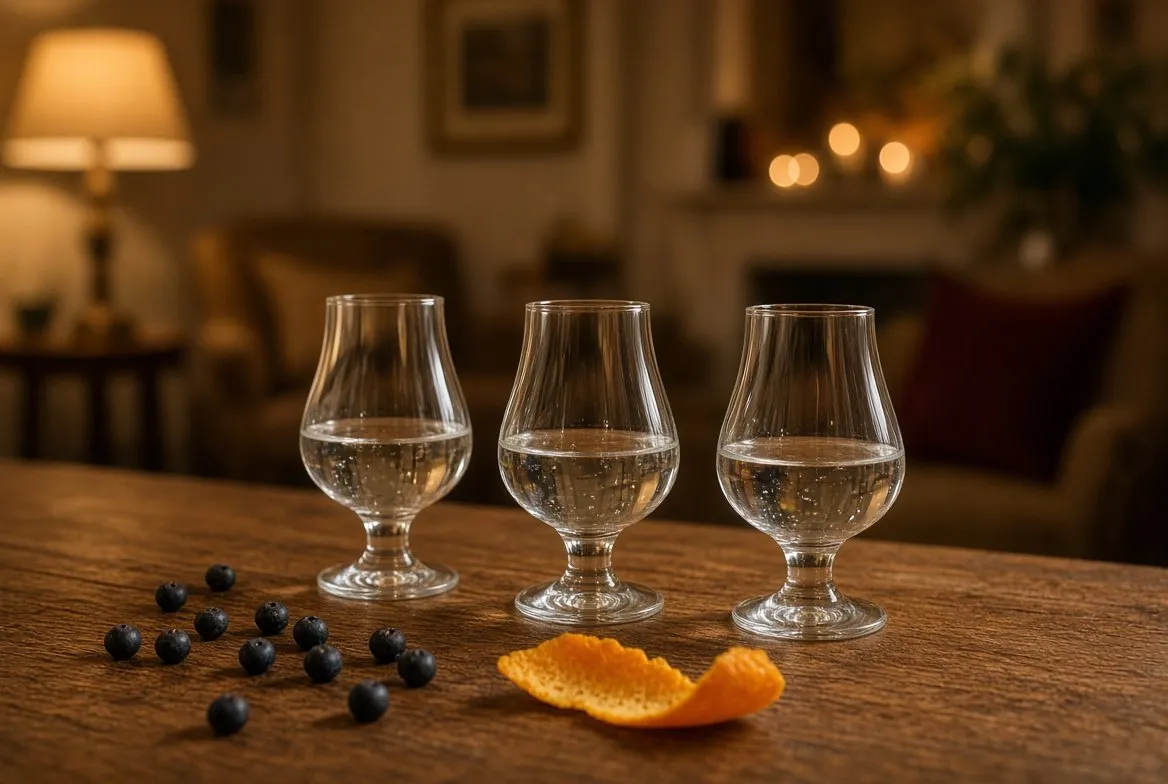
A gin tasting is one of the easiest ways to turn a few bottles and a handful of friends into a proper evening. It needs no special training and no expensive kit, just a bit of structure so people actually notice what they are drinking instead of pouring it all into tonic and forgetting the difference. This is how to set one up so it feels considered rather than fussy.
Pick the gins
Three to five is the sweet spot. Fewer and there is nothing to compare; more and palates give out. The trick is contrast: choose gins that are genuinely different rather than five variations on the same London Dry. A classic juniper-forward London Dry, a citrus-led contemporary gin, a savoury or herbal style, and something with a clear signature botanical (cucumber, pepper, floral notes) will give you a spread where the differences are obvious even to beginners.
If everyone brings a bottle, set a loose brief in advance so you do not end up with four nearly identical gins.
What you need
Keep it simple. One glass per gin per person is ideal, but a single glass rinsed between pours works fine. A jug of water for rinsing palates and glasses, plenty of still water to drink, and a good neutral tonic for the second round. Have a few plain crackers or bread on hand to reset between gins, and skip anything strongly flavoured that will drown the spirit.
Small measures matter. You are tasting, not drinking, so pour 10 to 15ml of each. People can always go back to a favourite at the end.
Taste it twice
Taste each gin neat first, then with tonic. Neat is where the character lives.
- Neat: a small pour, no ice. Smell it first with your mouth slightly open, then take a tiny sip and let it sit. Look for the obvious juniper, then whatever comes after: citrus, spice, something floral or herbal, how warm or smooth it feels.
- With tonic: add tonic at roughly one part gin to two or three parts tonic, with ice. This is how most people actually drink gin, and some gins that feel aggressive neat open up beautifully, while others lose their best botanicals under the tonic.
Run the order right
Go light to heavy. Start with the softest, most delicate gin and build toward the boldest, most juniper-heavy or spiced one. Taste the other way round and the big gins flatten everything that follows. If one gin is clearly going to dominate (a navy strength or a heavily spiced style), save it for last.
Keep a scorecard
You do not need anything formal, but a scrap of paper per person with a line for each gin keeps people engaged and gives you a winner at the end. Three columns is enough: what it smells like, what it tastes like, and a score out of five. Comparing notes afterwards is half the fun, and people are always surprised how differently the same gin reads to different palates.
The takeaway
A good gin tasting is mostly about structure, not expertise. Pick a handful of genuinely different gins, pour small, taste neat before tonic, work light to heavy, and jot down a few notes. Do that and a cheap evening at home tells you more about what you actually like in a gin than a year of ordering the same gin and tonic at the bar.
Tagged
Adjacent reading
Gin and Food: A Pairing Guide That Actually Works
How to pair gin with food, from seafood and cheese to game and charcuterie. Which gin styles suit which dishes, and how to build a pairing that works.
Cask-Aged Gin Explained: What Happens When Gin Meets the Barrel
Cask-aged gin is rested in barrels like whisky, taking on colour, warmth and spice. What it is, how it tastes, and how to drink this growing style.
Butterfly Pea Gin: The Colour-Changing Gin, Explained
Butterfly pea gin starts deep blue and turns pink before your eyes when you add tonic or citrus. How it works, why it is real, and how to drink it.